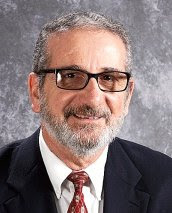
by Dr. M. N. Tarazi, Board of Trustees, Islamic Society of Greater Columbus
The first sign on Islam in North America was the construction of a mosque to establish community prayer. We have 3 mosques in Columbus, alhamdulillah, plus a new one under construction on Sunbury Rd. by the Islamic Foundation of Central Ohio, and another on the drawing board for Wilcox Rd. in the near future, planned by the Islamic Society of Greater Columbus. Our city is big, and we need places for prayer properly placed around the city. This growth should not be viewed as competitive, but complimentary, providing for the multiple needs of our diverse community.
The second stage of Islamic settlement is the establishment of a full time school. a school can create an Islamic environment for our children, so that they can experience the difference and fully appreciate what our religion offers as a total way of life. An Islamic education prepares a child with knowledge of Quran, Sunnah, and Arabic, to be able to grow up with a close relationship to Allah nd to his or her family and community, following the guidance of Allah (SWT). But an Islamic education includes more than this. An Islamic education also prepares a child to be a participating citizen in the world, well mannered and respectful of others, knowledgeable in general culture in a wide sense of the world, as well as knowledgeable in technical and practical how-to information.
For too long we have suffered with the public school system, where our heritage and religion are ignored if not insulted. A full time Islamic school has a wider impact on the community than just the education of its enrolled students. It sets an example and a standard of professional education for all other educational efforts in the community, the Saturday and Sunday schools for Muslim children remaining in public schools, and for adult education, providing facilities, resources, and inspiration for teachers, parents, children, and adults throughout the community. An initial primary school, once started, will provide the base for a whole school system, form preschool through high school, hopefully with sites throughout our geographical area.
With this dream before us, the school committee has investigated many properties. Sometimes we have asked the community to visit a promising site, raising hopes, only to have them fall as we had to drop each project for one reason or another. This fall we assembled still another committee, and made a promise to open a school in September 1996, but we still lacked a site. There were few buildings that met the requirements of a school. The Robinwood School, proposed last fall, proved, upon closer examination, to be a major maintenance liability, with high utility costs and an asbestos problem. the question of location has always been a major concern, to be easily accessible to the greatest number of Muslim families.
A limited survey of our community, conducted by the school committees in December, found an overwhelming support for the school concept. Nearly everyone polled said they would volunteer time and effort to support the school. Though the school will of course be run by a paid professional staff, this volunteer energy can be channeled in many ways to increase the quality of the school. Professional architects and engineers of our community have already volunteered time and effort to evaluate buildings and sites, and will continue to recommend wise design and maintenance of facilities. Volunteers can help with car-pooling for field trips, gardening, library staffing and teacher assisting, but most importantly with fundraising. Quality education costs, and the community has a responsibility to help parents with this effort.
Another outcome of the survey was a repeat of a study done several years ago by an earlier school committee. Most Muslims live in the northwest corner of Franklin County. An analysis of membership lists for both the ISGC and IFCO revealed the same results. Easy close access of any school to people living in this area is essential to the success of the school.
Ramadan has truly been a blessed month for us this year, for we have been able to sign a contract for a building and land for our first full time school The building committee negotiated a contract on the site before announcing it, to avoid further discouragement for the community if negotiations didn't work. Negotiations worked; for the first time we were able to sign a contract to buy a building. The contract included an escape clause, to allow time for shurah, consultation, with community leaders, the Board of Trustees, Executive Committee, the Shurah Council, and the school committees. Others were consulted about the project and a general recommendation came for the purchase.
So now we are announcing to the whole community that we have a contract signed to pay $470,000 for the current Hilliard Public Library building, an 8,000 square foot building on 3.4 acres of land. immediate renovations to make it a small school will cost an approximate $50,000 more. The location is on Scioto-Darby Rd. 1.5 miles west of I-270 Hilliard exit, (10 minutes from the current site of Friday prayers). We hope to open a minimum of k-3rd grade by September in the building. We have room to grow at this location and can plan to build 2 additions of equal size to the present building on the land, as we have community commitment and student enrollment. We encourage everyone in the community to visit the library building on Cemetery Road. [driving directions omitted]
We have 6 months to pay for the building. On April 30, the first installment of $100,000 is due, and we take possession. Sixty days later we will need $200,000 for the next installment. Sixty days later we will, Inshallah, make the final installment of $170,000. On August 30, we will Inshallah, open with the first year of classes.
Now is the time to make sacrifices for our children. This dream is worth so much more than the pizza parties, computer games, and other luxury things people buy their children and themselves. This is our chance to ensure the continuation of our religion by the next generation, our children who will, Inshallah, be better educated than we are ourselves. We need donations from the whole community to support this chance for our children.
Please pledge as much as you can for the next 6 months to pay for this school. Pledge! We need an endowment fund to help pay tuition for the poor in our community. Pledge! We need the best professional Muslim teachers, the essential element to the success of our school. Pledge! We have been a very generous community in giving charity to any good organization from out of town or abroad that came and asked for our help: for Bosnia, Chechnya, Palestine, Kashmir, and many others. Now it is here at home, for our own children, for our own future, that we need to give our very best. Pledge! We need a school we can be proud of, to fulfill our obligation as Muslims to pass on what was passed down to us, in a continuous chain from Prophet Muhammad (PBUH).
Saturday, July 24, 2010

Sunday, July 11, 2010
Feb 1996 Ramadan, Eid and the Media
by Brian Clouse
Ramadan Mubarak everyone! Some efforts were made with the media this year; progress was achieved and plans for the future set. Some new approaches were tested with television stations and some important contacts were made. Sadly, however, the results were not as fruitful as might be hoped, but the lessons learned are valuable.
First, for the entire week prior to the beginning of Ramadan, different media representatives were contacted. The Columbus Dispatch's Religion Editor, Sylvia Brooks, showed her usual interest in covering Ramadan. On Saturday January 20th, a very nice article appeared in the Dispatch explaining Islam and the celebration of Ramadan.
The news, weather, and/or community affairs departments of five local television stations were contacted in order to stimulate interest in Ramadan from a variety of perspectives. The weather departments were the least willing to participate, explaining that new moons, religious holidays, and sunset times are not part of their coverage. The news desks showed a little more enthusiasm, at least initially. Channels 4, 6, and 10 promised to announce the beginning of Ramadan during their 11:00 broadcasts, but we were not able to notify them early enough on the evening of January 20th that the new crescent moon had not been sighted. Some news editors expressed an interest in doing additional stories about Ramadan, but nothing solid has resulted as of yet.
This was the first time the community affairs departments were contacted, and it appears that they can be helpful in getting better coverage of Islam on local television news programs. Ron Thielman of WSYX Channel 6 was by far the most interested, and suggested several ways in which he could help. He promised to post the press releases sent to him on two major sources of information provided by Channel 6: A World Wide Web Home Page and a program in which the station faxes news reports to over 2,000 local businesses and organizations. He also promised to download the Public Service Announcements (PSA0 produced and distributed by the Islamic Society of North America (ISNA) and the Council on American-Islamic Relations (CAIR) for review and possible airing during periods of low commercial sponsorship. Channel 4's Leslie Zuk also made efforts to get the PSAs for the same purposes. Channel 10 said they would try if their satellite dishes were available at the time. as of yet, I have not seen the PSAs at all.
The Ohio State Lantern and WOSU AM-FM-TV, to my knowledge, included no coverage of Ramadan. Perhaps, the Muslim Student Association should make its presence better known to the University, but this has been done before. the manager of creative services at Channel 4, Jana Buckey, made the sharpest statement about any coverage of Ramadan, or Islamic issues of local interest: The Islamic population in Columbus is just too small to be of any significance. I explained the local and national demographics of the Muslim population compared to other religious groups to her assistant, but she did not think this would convince her boss.
As frustrating as this has been, there are some important lessons to take away from this. first, we have to remember that progress is being made, however slow it may be. Over time, with good contacts and improved methods, we will get more recognition in the local media. But Ms. Budkey's opinion is not unique, and it's no mystery why.
Ask yourself this question: What has the Islamic community in central Ohio done that is of any benefit to this society? I do not mean to minimize the efforts of any Muslim individuals or groups that have been made. What I am suggesting, however, is that perhaps we should not sit around waiting for the media to improve our image for us, while we try to pressure them into doing better. In the end that will not work, and the intentions are misplaced. If Muslims are truly the best of a community for the good of that community, then it's due time for that to show. Homelessness, illiteracy, hunger, drugs, alcohol, prostitution, gambling, and crime exist throughout this city. There certainly is no lack of opportunity for us, that is for sure. when the Muslim presence in Columbus, Ohio has a positive impact, rather than one of disinterest or self interest, then the media will not be able to ignore us. But is won't matter then, because the rewards from Allah will far outweigh anything the media can say or do.
Ramadan Mubarak everyone! Some efforts were made with the media this year; progress was achieved and plans for the future set. Some new approaches were tested with television stations and some important contacts were made. Sadly, however, the results were not as fruitful as might be hoped, but the lessons learned are valuable.
First, for the entire week prior to the beginning of Ramadan, different media representatives were contacted. The Columbus Dispatch's Religion Editor, Sylvia Brooks, showed her usual interest in covering Ramadan. On Saturday January 20th, a very nice article appeared in the Dispatch explaining Islam and the celebration of Ramadan.
The news, weather, and/or community affairs departments of five local television stations were contacted in order to stimulate interest in Ramadan from a variety of perspectives. The weather departments were the least willing to participate, explaining that new moons, religious holidays, and sunset times are not part of their coverage. The news desks showed a little more enthusiasm, at least initially. Channels 4, 6, and 10 promised to announce the beginning of Ramadan during their 11:00 broadcasts, but we were not able to notify them early enough on the evening of January 20th that the new crescent moon had not been sighted. Some news editors expressed an interest in doing additional stories about Ramadan, but nothing solid has resulted as of yet.
This was the first time the community affairs departments were contacted, and it appears that they can be helpful in getting better coverage of Islam on local television news programs. Ron Thielman of WSYX Channel 6 was by far the most interested, and suggested several ways in which he could help. He promised to post the press releases sent to him on two major sources of information provided by Channel 6: A World Wide Web Home Page and a program in which the station faxes news reports to over 2,000 local businesses and organizations. He also promised to download the Public Service Announcements (PSA0 produced and distributed by the Islamic Society of North America (ISNA) and the Council on American-Islamic Relations (CAIR) for review and possible airing during periods of low commercial sponsorship. Channel 4's Leslie Zuk also made efforts to get the PSAs for the same purposes. Channel 10 said they would try if their satellite dishes were available at the time. as of yet, I have not seen the PSAs at all.
The Ohio State Lantern and WOSU AM-FM-TV, to my knowledge, included no coverage of Ramadan. Perhaps, the Muslim Student Association should make its presence better known to the University, but this has been done before. the manager of creative services at Channel 4, Jana Buckey, made the sharpest statement about any coverage of Ramadan, or Islamic issues of local interest: The Islamic population in Columbus is just too small to be of any significance. I explained the local and national demographics of the Muslim population compared to other religious groups to her assistant, but she did not think this would convince her boss.
As frustrating as this has been, there are some important lessons to take away from this. first, we have to remember that progress is being made, however slow it may be. Over time, with good contacts and improved methods, we will get more recognition in the local media. But Ms. Budkey's opinion is not unique, and it's no mystery why.
Ask yourself this question: What has the Islamic community in central Ohio done that is of any benefit to this society? I do not mean to minimize the efforts of any Muslim individuals or groups that have been made. What I am suggesting, however, is that perhaps we should not sit around waiting for the media to improve our image for us, while we try to pressure them into doing better. In the end that will not work, and the intentions are misplaced. If Muslims are truly the best of a community for the good of that community, then it's due time for that to show. Homelessness, illiteracy, hunger, drugs, alcohol, prostitution, gambling, and crime exist throughout this city. There certainly is no lack of opportunity for us, that is for sure. when the Muslim presence in Columbus, Ohio has a positive impact, rather than one of disinterest or self interest, then the media will not be able to ignore us. But is won't matter then, because the rewards from Allah will far outweigh anything the media can say or do.
Feb 1996 News Fly Around
MATT
February 22 - Columbus -- Muslim employees of AT&T, Columbus, have formed an official group at the company called MATT (Muslims at AT&T). the objectives of this group are "to support and provide resources for the Muslim associates at the Columbus Works" and to "facilitate a better understanding of Islamic ideology and culture at the Columbus Works" according to their by-laws. Among their activities is public relations and increasing awareness. This is done by participating in activities in the workplace and by inviting guest speakers to address issues that face Muslim employees in the workplace and address stereotyping of Muslims in general.
The group also has some social activities for occasions such as a collective family iftar in Ramadan. The group meets regularly to discuss 1. issues that relate to Muslims in the workplace, and 2. study teachings from Quran and Sunnah. the group also has a room for congregational prayer where Dhuhr and Asr prayers are performed. AT&T at Columbus has about 20 Muslim employees. Similar groups within AT&T exist in Illinois and New Jersey.
February 22 - Columbus -- Muslim employees of AT&T, Columbus, have formed an official group at the company called MATT (Muslims at AT&T). the objectives of this group are "to support and provide resources for the Muslim associates at the Columbus Works" and to "facilitate a better understanding of Islamic ideology and culture at the Columbus Works" according to their by-laws. Among their activities is public relations and increasing awareness. This is done by participating in activities in the workplace and by inviting guest speakers to address issues that face Muslim employees in the workplace and address stereotyping of Muslims in general.
The group also has some social activities for occasions such as a collective family iftar in Ramadan. The group meets regularly to discuss 1. issues that relate to Muslims in the workplace, and 2. study teachings from Quran and Sunnah. the group also has a room for congregational prayer where Dhuhr and Asr prayers are performed. AT&T at Columbus has about 20 Muslim employees. Similar groups within AT&T exist in Illinois and New Jersey.
Thursday, July 8, 2010
Jan. 1996 External Experts For school Projects
by Norma Tarazi
Three workshops took place this month for the school, one in Dayton with Sr. Susan Douglas, and two hosted with experts from out of town, Dr. Shaker Sayed, education director at ISNA, and Dr. Abdullah Idris, principal of the Islamic school of Toronto, one of the most successful in North America. The Dayton workshop specifically addressed ways to integrate Islam and Islamic history into social studies programs. Two copies of the Douglas social studies curriculum supplements are now available in our community. 'Dr. Shaker came at the end of November specifically to help the teachers of our Islamic weekend schools, but his address was also open to those working on the full time school project. The two day workshop addressed three topics, the qualities of a good Muslim teacher, teaching approaches for Islamic studies, and teaching approaches for Arabic. Much of the material on teacher qualities and teaching approaches was very interesting for Muslim parents as well as professional teachers.
In an extra evening meeting, Dr. Shaker discussed practical considerations for starting a full-time Islamic school. Of basic concern is the financial investment. As someone who has been a principal himself and presently works for ISNA primarily as a resource guide to the 170 Islamic schools now in North America, Dr. Shaker has a wealth of experience. Islamic schools nationwide are charging between $2000 and $3500 per year tuition for each student. The actual cost of the student is always more than that. The difference has to be made up in contributions from the community at large. However, we should keep expenses under tight control. It is unrealistic to expect contributions to count for more than 15% of expenses.
Communities who invest first in a school building acquire overhead that must be paid whether or not there are students. A large building requires the same amount to heat and light for 4 students as 120. For this reason, schools which are financially viable have usually started in shared facilities with a mosque or in temporary quarters that are rather makeshift. As student enrollment increases, the school moves out into more professional quarters. If a large building is acquired, efforts need to be made to make multipurpose use of the building for other activities, such as evening banquet facilities for parties, or daycare facilities in one part of the building, to help share overhead costs.
Another important issue discussed at this meeting was the ability to create a credible bilingual school. The best results so far seen by Dr. Shaker, for Arabic ability in a child graduating from and Islamic school without other access to Arabic, is 4th grade level. However, he said continual improvements of curriculum are being made and he expects continued improvement in this area in the next few years. The dreams of the parents and their commitment is the most important requirement for a successful Islamic school.
Dr. Abdullah Idris also discussed the topic of starting an Islamic school. His school in Toronto started in 1982 with 13 children from 7 committed families. At the time, the community referred to them as "those crazy people" he admitted with pride. He stressed the importance of having a year to plan curriculum before opening the next grade, to make sure it is successful. Don't bite off more than you can chew, in other words. Now that school is full with 350 students through 8th grade. There are now a total of 4 schools in the project, all operating at full enrollment and financially viable, and they have a waiting list of 5000. Student-teacher ratio is 30/1 overall, with smaller ratios for younger pupils. A high school for girls was started for girls in 7th through 12th after the 8th grade was opened. Girls who graduated from this school have been very successful in college. The school project is now negotiating to purchase a large high school facility.
After visiting the proposed sites under study by our community, Dr. Abdullah liked both of the Whitehall sites. he one currently in church use is not very attractive outside, he commented, but he toured the inside and felt it to be full of potential. He liked the outside appearance of the Robinwood site, only worrying about the proximity to broad St., with the possibility of security problems. He also saw the Sunbury site planned for the mosque weekend school complex. He expressed concern about the power plant nearby and the small area of the site if anyone wanted to make a full-time school use of that future complex. Though he was not shown the potential northwest land, discussion arose about it. Custom built facilities are always more appreciated by communities if the waiting time and cost are not too substantially greater than buying an old building on the market.
Our two guests have also helped in preparing a community-wide demographic survey which was started in the last weeks of December. With such dedicated experts to assist us, we will have only ourselves to blame if we do not produce a high quality full-time Islamic school in Columbus.
Three workshops took place this month for the school, one in Dayton with Sr. Susan Douglas, and two hosted with experts from out of town, Dr. Shaker Sayed, education director at ISNA, and Dr. Abdullah Idris, principal of the Islamic school of Toronto, one of the most successful in North America. The Dayton workshop specifically addressed ways to integrate Islam and Islamic history into social studies programs. Two copies of the Douglas social studies curriculum supplements are now available in our community. 'Dr. Shaker came at the end of November specifically to help the teachers of our Islamic weekend schools, but his address was also open to those working on the full time school project. The two day workshop addressed three topics, the qualities of a good Muslim teacher, teaching approaches for Islamic studies, and teaching approaches for Arabic. Much of the material on teacher qualities and teaching approaches was very interesting for Muslim parents as well as professional teachers.
In an extra evening meeting, Dr. Shaker discussed practical considerations for starting a full-time Islamic school. Of basic concern is the financial investment. As someone who has been a principal himself and presently works for ISNA primarily as a resource guide to the 170 Islamic schools now in North America, Dr. Shaker has a wealth of experience. Islamic schools nationwide are charging between $2000 and $3500 per year tuition for each student. The actual cost of the student is always more than that. The difference has to be made up in contributions from the community at large. However, we should keep expenses under tight control. It is unrealistic to expect contributions to count for more than 15% of expenses.
Communities who invest first in a school building acquire overhead that must be paid whether or not there are students. A large building requires the same amount to heat and light for 4 students as 120. For this reason, schools which are financially viable have usually started in shared facilities with a mosque or in temporary quarters that are rather makeshift. As student enrollment increases, the school moves out into more professional quarters. If a large building is acquired, efforts need to be made to make multipurpose use of the building for other activities, such as evening banquet facilities for parties, or daycare facilities in one part of the building, to help share overhead costs.
Another important issue discussed at this meeting was the ability to create a credible bilingual school. The best results so far seen by Dr. Shaker, for Arabic ability in a child graduating from and Islamic school without other access to Arabic, is 4th grade level. However, he said continual improvements of curriculum are being made and he expects continued improvement in this area in the next few years. The dreams of the parents and their commitment is the most important requirement for a successful Islamic school.
Dr. Abdullah Idris also discussed the topic of starting an Islamic school. His school in Toronto started in 1982 with 13 children from 7 committed families. At the time, the community referred to them as "those crazy people" he admitted with pride. He stressed the importance of having a year to plan curriculum before opening the next grade, to make sure it is successful. Don't bite off more than you can chew, in other words. Now that school is full with 350 students through 8th grade. There are now a total of 4 schools in the project, all operating at full enrollment and financially viable, and they have a waiting list of 5000. Student-teacher ratio is 30/1 overall, with smaller ratios for younger pupils. A high school for girls was started for girls in 7th through 12th after the 8th grade was opened. Girls who graduated from this school have been very successful in college. The school project is now negotiating to purchase a large high school facility.
After visiting the proposed sites under study by our community, Dr. Abdullah liked both of the Whitehall sites. he one currently in church use is not very attractive outside, he commented, but he toured the inside and felt it to be full of potential. He liked the outside appearance of the Robinwood site, only worrying about the proximity to broad St., with the possibility of security problems. He also saw the Sunbury site planned for the mosque weekend school complex. He expressed concern about the power plant nearby and the small area of the site if anyone wanted to make a full-time school use of that future complex. Though he was not shown the potential northwest land, discussion arose about it. Custom built facilities are always more appreciated by communities if the waiting time and cost are not too substantially greater than buying an old building on the market.
Our two guests have also helped in preparing a community-wide demographic survey which was started in the last weeks of December. With such dedicated experts to assist us, we will have only ourselves to blame if we do not produce a high quality full-time Islamic school in Columbus.
Friday, June 25, 2010
Dec 1995 Islamic School in Sight for ISGC as Committees Form and Set Goals
by Sandra Gray
Members of the ISGC have been working hard and are determined that a full-time Islamic school will be in operation by next September. The School Formation Committee has met several times with members of both the ISGC and a few members from IFCO. the Formation Committee has assigned four subcommittees, each designed for a specific purpose. The subcommittees are Administrative, Curriculum, Engineering, and Finance. Each of the subgroups have also met several times and are will on the way towards progress.
At the last Formation Committee meeting of November 14, such issues as the acquisition of the school in Whitehall, which is currently up for sale, were discussed. Most members present seem to feel that purchasing an already built school would be more feasible and efficient in terms of finance, zoning, and safety reasons. An Open House for the Whitehall school was held on November 11, where all members of the community were invited to view the school. It was an impressive building, according to many reports, with all the facilities already in place for a school, as well as for a multipurpose centr for the ISGC. Br. Khalid Fareg stressed the importance of community members' participation in and support for this project, or any other school project which may arise. The Formation Committee did not make a final decision for any solid offer on the school, and it is still being discussed. In the November 14th meeting, each of the four subcommittees presented a report of their progress to the entire Formation Committee for open discussion.
The Administrative Committee discussed their pending survey to be sent to all community members which is needed to help in the decision-making process. For example, it was discussed that it could not yet be determined how advanced the school would be (kindergarten, elementary, middle or high school or a combination) without an actual survey of the community's needs and the number of students parents might register. A survey is imperative in this decision-making process and ensures community participation. The Administrative committee also raised the issue of types of private schools which might be plausible, and some members attended a workshop at the Ohio State Department of Education to get information which may be helpful to the ISGC.
The Curriculum Committee discussed their objective of finding and evaluating the best available curricula form the State, private, and successful Islamic schools. Some successful Islamic schools such as the ISNA Islamic School in Ontario and the Madrasatul "Ilm in Indianapolis have already expressed their support and willingness to help in curriculum development. Members stressed the importance of a strong Islamic and bi-lingual orientation in the ISGC school project.
The Finance Committee discussed various means of income for the school, since it would no doubt be an expensive project. Many options were discussed to raise funds, such as fundraisers, tuition as well as tuition aid, donations, and even Islamic-based investments. The survey, to be administered soon, would also in this case be beneficial, since it might help determine how well the community will be able to support the school.
The Engineering Committee has been very busy with details in looking for possible locations for the school, as well as investigating seriously the Whitehall school. It was determined through the advice of this committee that a permanent building would be superior, since classroom bungalows had been discussed. Other locations are also currently being investigated.
Now that it is certain that a full-time Islamic private school will be built, this is the time to encourage members of this community to participate at all levels to ensure the best possible success for our children's' education. the choice is ours: either we get involved and form a superior school with an Islamic-based education, or we leave our children to become absorbed by the mediocre and kufr-based public schools.
Members of the ISGC have been working hard and are determined that a full-time Islamic school will be in operation by next September. The School Formation Committee has met several times with members of both the ISGC and a few members from IFCO. the Formation Committee has assigned four subcommittees, each designed for a specific purpose. The subcommittees are Administrative, Curriculum, Engineering, and Finance. Each of the subgroups have also met several times and are will on the way towards progress.
At the last Formation Committee meeting of November 14, such issues as the acquisition of the school in Whitehall, which is currently up for sale, were discussed. Most members present seem to feel that purchasing an already built school would be more feasible and efficient in terms of finance, zoning, and safety reasons. An Open House for the Whitehall school was held on November 11, where all members of the community were invited to view the school. It was an impressive building, according to many reports, with all the facilities already in place for a school, as well as for a multipurpose centr for the ISGC. Br. Khalid Fareg stressed the importance of community members' participation in and support for this project, or any other school project which may arise. The Formation Committee did not make a final decision for any solid offer on the school, and it is still being discussed. In the November 14th meeting, each of the four subcommittees presented a report of their progress to the entire Formation Committee for open discussion.
The Administrative Committee discussed their pending survey to be sent to all community members which is needed to help in the decision-making process. For example, it was discussed that it could not yet be determined how advanced the school would be (kindergarten, elementary, middle or high school or a combination) without an actual survey of the community's needs and the number of students parents might register. A survey is imperative in this decision-making process and ensures community participation. The Administrative committee also raised the issue of types of private schools which might be plausible, and some members attended a workshop at the Ohio State Department of Education to get information which may be helpful to the ISGC.
The Curriculum Committee discussed their objective of finding and evaluating the best available curricula form the State, private, and successful Islamic schools. Some successful Islamic schools such as the ISNA Islamic School in Ontario and the Madrasatul "Ilm in Indianapolis have already expressed their support and willingness to help in curriculum development. Members stressed the importance of a strong Islamic and bi-lingual orientation in the ISGC school project.
The Finance Committee discussed various means of income for the school, since it would no doubt be an expensive project. Many options were discussed to raise funds, such as fundraisers, tuition as well as tuition aid, donations, and even Islamic-based investments. The survey, to be administered soon, would also in this case be beneficial, since it might help determine how well the community will be able to support the school.
The Engineering Committee has been very busy with details in looking for possible locations for the school, as well as investigating seriously the Whitehall school. It was determined through the advice of this committee that a permanent building would be superior, since classroom bungalows had been discussed. Other locations are also currently being investigated.
Now that it is certain that a full-time Islamic private school will be built, this is the time to encourage members of this community to participate at all levels to ensure the best possible success for our children's' education. the choice is ours: either we get involved and form a superior school with an Islamic-based education, or we leave our children to become absorbed by the mediocre and kufr-based public schools.
Dec 1995 Columbus Holds International Festival
by Mufakharul Islam
The International Festival in Columbus is an annual festival of the international community living in Central Ohio. It is held on the first weekend of November of each year. The organizer of this event is the United Nations chapter of Columbus, Ohio. even though it is held in Columbus, different ethnic people living all over the U.S. attended this event to represent their ethnic and cultural customs. It is interesting to know about the different cultures and the different ethnic groups in this festival. Every year an estimated 40 to 50 thousand visitors attend the festival. This year it was help on November 4th and 5th. There were at least 200 booths where foods, clothes, and different traditional items were for sale.
The Islamic Foundation of central Ohio (IFCO) had a booth in this festival where foods and clothing form different Muslim countries such as Egypt, Pakistan, India, and Bangladesh were sold. Sisters and children from IFCO helped in cooking and selling food. At one end of the booth an "invitation" table was set up to attract visitors. Some brothers from IFCO were there to explain Islamic traditions and principles to them. There were a lot of pamphlets on Islam and the sunnah of the Prophet (PBUH). There were some Islamic videos displayed for the children, to help them learn about Islam. This turned out to be a key attraction for both parents and children and an opportunity for them to inquire about Islam. IFCO's booth was the only booth with an Islamic agenda. the festival environment may not be suited for Muslim women gatherings but it is good for disseminating ideas about Islam to the attendees.
Due to the fact that this festival attracts a very large crowd, the ISGC and IFCO should take more initiatives to disseminate information about Islam in this festival.
The International Festival in Columbus is an annual festival of the international community living in Central Ohio. It is held on the first weekend of November of each year. The organizer of this event is the United Nations chapter of Columbus, Ohio. even though it is held in Columbus, different ethnic people living all over the U.S. attended this event to represent their ethnic and cultural customs. It is interesting to know about the different cultures and the different ethnic groups in this festival. Every year an estimated 40 to 50 thousand visitors attend the festival. This year it was help on November 4th and 5th. There were at least 200 booths where foods, clothes, and different traditional items were for sale.
The Islamic Foundation of central Ohio (IFCO) had a booth in this festival where foods and clothing form different Muslim countries such as Egypt, Pakistan, India, and Bangladesh were sold. Sisters and children from IFCO helped in cooking and selling food. At one end of the booth an "invitation" table was set up to attract visitors. Some brothers from IFCO were there to explain Islamic traditions and principles to them. There were a lot of pamphlets on Islam and the sunnah of the Prophet (PBUH). There were some Islamic videos displayed for the children, to help them learn about Islam. This turned out to be a key attraction for both parents and children and an opportunity for them to inquire about Islam. IFCO's booth was the only booth with an Islamic agenda. the festival environment may not be suited for Muslim women gatherings but it is good for disseminating ideas about Islam to the attendees.
Due to the fact that this festival attracts a very large crowd, the ISGC and IFCO should take more initiatives to disseminate information about Islam in this festival.
Nov 1995 Convention Recall ... Why Can't Muslims Organize
IQRA! Survey of the Post-Convention Syndrome
by Ayman Ismail
Almost every independent opinion received, regarding the ISNA convention, was highly positive and admiring. This was expected, for even the blind could tell that planning, organization, thought, and dedication, superseded by pure intention, would bear fruit. However, what puzzles many came after the convention: "how come a community[Columbus] that good cannot come together for a single successful project?"
"I think, wa Allahu 'alam, that the community in Columbus is ready to team up for local projects," says Rached Zantout. "It is only politics that prevent them from doing so, as well as the lack of a charismatic and uniting leadership on each and every side."
The issue of leadership was also seconded by Hazem Gheith. "Sometimes we put unqualified persons who diverge instead of teaming people up."
"For example," cites one commentator, "two projects that the community in Columbus could have united upon, were the cemetery and the new Islamic Center/Masjid/Ful time school. Both the ISGC and IFCO are working one variations of those two projects. IFCO has long had land but problems have ensued in building and maintenance. They also have cemetery land already zoned and ready to be used. Omar Mosque has the manpower, willingness, and money to start projects. Yet breakdowns in communications and methods obstructed the goals for both ISCG and IFCO, despite their being the same.
But didn't the ISNA convention also have problems? In ISNA's case, it was a very clear project with very clear objectives. "The credit goes all to ISNA if we did a good job so there was less incentive for people who play politics to be involved. It does not pay much back in terms of short term political gains in the community," says Rached. The advantage of depoliticizing the work seems twofold. More sincere work, and far fewer conflicts. Given a project that size, it would have seemed logical to have diverse opinins spoil the work! Right?
Not necessarily. The ISNA convention was such a huge project that everybody who wanted to work could do so without being bothered or bothering the other parts of the community which did not think like them. "For example," says a commentator, "One of the objections from IFCO people (some of them) to joint activities with ISGC is that we "separate men and women". Well, in the ISNA convention, if you are against that separation you could have worked with some of the committees that did not care about separation, and if you were with that separation you could have worked in other committees. There was room for everyone.
Another reason appears to be in what social scientists call "community participation". ISNA Convention steering committees turned to the grass roots. This should not take place only at the implementation phase, but right from the start. "Not involving as many people as you can when preparing for a project or event will alienate the project's prime support," says Hazem Gheith.
Is there hope? There is a lot that can be done to bring that convention spirit back. The leaders of ISGC, IGCO, and Masjid Al-Islam should get together and start planning for common projects with the same spirit of the ISNA convention which would keep that unity feeling or raise it up from time to time. Joint lectures, not merely picnics, preparing for the next ISNA convention, a Columbus Islamic Day, a workshop for Muslims about some issues facing them in Columbus, River Clean Up Day by us Muslims, adopting part s of highways that pass through Columbus, etc... And of course, there is the opportunity in the joint full-time Islamic school project.
During the convention the unity of the community became very clear. "None of those who worked expected a reward and none were received," says Altaf Wani. "The satisfaction from within for a job well was enough." Now this community has a new opportunity. Let's wait and see.
The causes of community disagreements seem clear: politicizing of work and lack of leadership. The solution is equally clear: we must learn to work with the spirit of teamwork.
by Ayman Ismail
Almost every independent opinion received, regarding the ISNA convention, was highly positive and admiring. This was expected, for even the blind could tell that planning, organization, thought, and dedication, superseded by pure intention, would bear fruit. However, what puzzles many came after the convention: "how come a community[Columbus] that good cannot come together for a single successful project?"
"I think, wa Allahu 'alam, that the community in Columbus is ready to team up for local projects," says Rached Zantout. "It is only politics that prevent them from doing so, as well as the lack of a charismatic and uniting leadership on each and every side."
The issue of leadership was also seconded by Hazem Gheith. "Sometimes we put unqualified persons who diverge instead of teaming people up."
"For example," cites one commentator, "two projects that the community in Columbus could have united upon, were the cemetery and the new Islamic Center/Masjid/Ful time school. Both the ISGC and IFCO are working one variations of those two projects. IFCO has long had land but problems have ensued in building and maintenance. They also have cemetery land already zoned and ready to be used. Omar Mosque has the manpower, willingness, and money to start projects. Yet breakdowns in communications and methods obstructed the goals for both ISCG and IFCO, despite their being the same.
But didn't the ISNA convention also have problems? In ISNA's case, it was a very clear project with very clear objectives. "The credit goes all to ISNA if we did a good job so there was less incentive for people who play politics to be involved. It does not pay much back in terms of short term political gains in the community," says Rached. The advantage of depoliticizing the work seems twofold. More sincere work, and far fewer conflicts. Given a project that size, it would have seemed logical to have diverse opinins spoil the work! Right?
Not necessarily. The ISNA convention was such a huge project that everybody who wanted to work could do so without being bothered or bothering the other parts of the community which did not think like them. "For example," says a commentator, "One of the objections from IFCO people (some of them) to joint activities with ISGC is that we "separate men and women". Well, in the ISNA convention, if you are against that separation you could have worked with some of the committees that did not care about separation, and if you were with that separation you could have worked in other committees. There was room for everyone.
Another reason appears to be in what social scientists call "community participation". ISNA Convention steering committees turned to the grass roots. This should not take place only at the implementation phase, but right from the start. "Not involving as many people as you can when preparing for a project or event will alienate the project's prime support," says Hazem Gheith.
Is there hope? There is a lot that can be done to bring that convention spirit back. The leaders of ISGC, IGCO, and Masjid Al-Islam should get together and start planning for common projects with the same spirit of the ISNA convention which would keep that unity feeling or raise it up from time to time. Joint lectures, not merely picnics, preparing for the next ISNA convention, a Columbus Islamic Day, a workshop for Muslims about some issues facing them in Columbus, River Clean Up Day by us Muslims, adopting part s of highways that pass through Columbus, etc... And of course, there is the opportunity in the joint full-time Islamic school project.
During the convention the unity of the community became very clear. "None of those who worked expected a reward and none were received," says Altaf Wani. "The satisfaction from within for a job well was enough." Now this community has a new opportunity. Let's wait and see.
The causes of community disagreements seem clear: politicizing of work and lack of leadership. The solution is equally clear: we must learn to work with the spirit of teamwork.
Subscribe to:
Posts (Atom)