Your Responsibility and Your Obligation
A recent habit has developed this summer. Some parents come to the mosque and leave their kids unattended in the parking lot. This is a formula for sure disaster, and a potential for lawsuits. While you are attending functions in the mosque, some of your children have been shredding Islamic leaflets in the paper shredder upstairs. Others have been getting free rides in a "Kroger Shopping Cart" which is propelled by another 6 year old down Riverview Drive.
I am not sure who is to blame, the undisciplined child or the careless parent? If you cannot keep your children under control and do not know what they are destroying during your visit to the mosque, then perhaps you should leave them at home with the other parent. I always believe that a child imprisoned at home is much better than a dead child on Riverview Drive.
At this time I would like to encourage the fathers to donate 2 hours a week to give a chance to their wives to have quality time in the halaqahs for sisters. This was the common practice of our brother, Dr. Ibrahim AI-Hadban. No parent should be permanently stuck home with the kids.
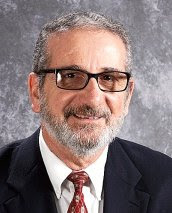
Khalid Farag
Dear Editor
Confusing Committees
In the last issue of IQRA, the MSA announced the formation of a new committee. The name of the committee was "Media Awareness". The goals of this committee were:
1. Handle the increasing frequent communication with the commercial media.
2. Prepare press releases.
3. Hold news conferences.
4. Prepare statements.
Although forming new committees should be commendable, especially in our current situation, I would like to point out a paragraph in the MSA constitution that really confuses the roles played by this committee. The paragraph in the constitution is the following: "The Information Coordinator shall be responsible to the President for:
9.1 Coordinating the Islamic Children school and Adult Education Programs.
9.2 Preparing circulars, bulletins and newsletters of the Association and presenting the same before the Committee for their views.
9.3 Circulating the Association's publications (i.e. prayer calendar, etc.)
9.4 Editing and publishing literature on behalf of the Association.
9.5 Organizing and directing the use of the library, media center, television programs, Islamic book service, exhibitions, etc."
I would like to emphasize points 9.2 and 9.4 and ask what is the difference between this new committee and the information committee? More specifically how does the MSA plan to prevent duality between the newly formed committee and the Information committee? Finally, I would like to ask the MSA to clarify who is responsible for the committee and who are the members? The announcement said that the committee had been formed. It is only logical to give a contact name or list the members of that committee.
Rached Zantout
Friday, March 5, 2010

Oct. 1994 MSA/ISGC News
Two important meetings are planned for the MSA and ISGC in October, to discuss and institute a constitution for the new ISGC, a well as evaluate the progress of the MSA executive committee.
Public Hearing Friday, Oct. 14th at 8:30 p.m.
Agenda:
1. Progress Report by MSA Executive Committee,
2. Hearing on ISGC Constitution
General Assembly Meeting, Friday, Oct. 21 at 8:30 p.m.
Agenda: Vote on ISGC Constitution
All MSA/ISGC members are urged to attend!
Last month a new MSA was inaugurated - THE MUSLIM STUDENT ASSOCIATION AT COLUMBUS STATE COLLEGE. Your sister MSA at OSU congratulates you!
Public Hearing Friday, Oct. 14th at 8:30 p.m.
Agenda:
1. Progress Report by MSA Executive Committee,
2. Hearing on ISGC Constitution
General Assembly Meeting, Friday, Oct. 21 at 8:30 p.m.
Agenda: Vote on ISGC Constitution
All MSA/ISGC members are urged to attend!
Last month a new MSA was inaugurated - THE MUSLIM STUDENT ASSOCIATION AT COLUMBUS STATE COLLEGE. Your sister MSA at OSU congratulates you!
Oct. 1994 Our Mosque Our Pride?
by Ahmed Abdel-Ghany
During April 1994, I did a preference I survey regarding the physical environment of Omar Ibn EI-Khattab Mosque. The main objective of the study was to test the reliability of certain elicitation methods used in eliciting and analyzing users' preferences; this was one of many objectives of my dissertation research project. First, I deeply thank all of the people who helped me accomplish this study. Their responses to the questionnaire were very useful and informative.
In the present article, I will show the reader a brief explanation of the questionnaire used in the study, some results of the study (pattern of users' preferences to the Mosque physical improvements), and recommendations for future planning projects.
The questionnaire consisted of two main questions. In the first question, respondents (30 • people) were shown thirteen statements depicting the physical condition of the mosque and its surrounding environment and they were asked to show their degree of agreement to the statement , e.g., The mosque surrounding streets are well paved:
• Agree strongly (AS)
• Agree (A)
• No Opinion (NO)
• Disagree (D) •
• Disagree strongly (DS)
The thirteen questions' centered around the topics of the physical condition of bathrooms, carpets, lighting of surrounding streets, paving of surrounding streets, parking area, internal walls, external facades, air conditioning, windows' curtains, and internal lighting. In the second question, a table of proposes elements of improvements (carpet replacement, bathroom repairing, upgrading of air conditioning, etc.) and their cost were shown to respondents, and they were asked to construct their preferred bundle subject to a given budget constraint. The cost of elements of improvements as well as the budget constraint were determined hypothetically.
There were two results of the study: (1) people and their perception of the severity of the physical environmental problems. (2) an aggregated and preferred project.
In brief, people found that source of dissatisfaction are: poor bathroom condition, bad lighting of the surrounding streets, bad paving of the surrounding streets, and a shortage of parking area during Friday prayer. The aggregated and preferred project includes carpet replacement, bath room repair, street paving improvements, street lighting improvements, and school building upgrades.
This study has shown a little bit of information about the Mosque users' preferences (because of the low number of respondents as well as the main objective of the study). However, I believe that this kind of survey must be done prior to any decisions concerning our Muslim community. People must participate in making decisions that affect themselves, their family, their children, and their community. Also, it is the responsibility of the MSA Executive Committee to have the public participate in making better decisions.
I am finishing this article with the recommendation of using some valuable participatory planning techniques for our future planning projects, one (or a combination of some) of them can be used:
• questionnaires
• public meetings
• workshops
• advisory committees
• public representation
The choice of the participatory planning technique as well as the proposed solution itself must get people consensus.
During April 1994, I did a preference I survey regarding the physical environment of Omar Ibn EI-Khattab Mosque. The main objective of the study was to test the reliability of certain elicitation methods used in eliciting and analyzing users' preferences; this was one of many objectives of my dissertation research project. First, I deeply thank all of the people who helped me accomplish this study. Their responses to the questionnaire were very useful and informative.
In the present article, I will show the reader a brief explanation of the questionnaire used in the study, some results of the study (pattern of users' preferences to the Mosque physical improvements), and recommendations for future planning projects.
The questionnaire consisted of two main questions. In the first question, respondents (30 • people) were shown thirteen statements depicting the physical condition of the mosque and its surrounding environment and they were asked to show their degree of agreement to the statement , e.g., The mosque surrounding streets are well paved:
• Agree strongly (AS)
• Agree (A)
• No Opinion (NO)
• Disagree (D) •
• Disagree strongly (DS)
The thirteen questions' centered around the topics of the physical condition of bathrooms, carpets, lighting of surrounding streets, paving of surrounding streets, parking area, internal walls, external facades, air conditioning, windows' curtains, and internal lighting. In the second question, a table of proposes elements of improvements (carpet replacement, bathroom repairing, upgrading of air conditioning, etc.) and their cost were shown to respondents, and they were asked to construct their preferred bundle subject to a given budget constraint. The cost of elements of improvements as well as the budget constraint were determined hypothetically.
There were two results of the study: (1) people and their perception of the severity of the physical environmental problems. (2) an aggregated and preferred project.
In brief, people found that source of dissatisfaction are: poor bathroom condition, bad lighting of the surrounding streets, bad paving of the surrounding streets, and a shortage of parking area during Friday prayer. The aggregated and preferred project includes carpet replacement, bath room repair, street paving improvements, street lighting improvements, and school building upgrades.
This study has shown a little bit of information about the Mosque users' preferences (because of the low number of respondents as well as the main objective of the study). However, I believe that this kind of survey must be done prior to any decisions concerning our Muslim community. People must participate in making decisions that affect themselves, their family, their children, and their community. Also, it is the responsibility of the MSA Executive Committee to have the public participate in making better decisions.
I am finishing this article with the recommendation of using some valuable participatory planning techniques for our future planning projects, one (or a combination of some) of them can be used:
• questionnaires
• public meetings
• workshops
• advisory committees
• public representation
The choice of the participatory planning technique as well as the proposed solution itself must get people consensus.
Monday, March 1, 2010
Sept. 1994 Bosnian Refugees
The Islamic community welcomes a Bosnian family, mother Elverra, and her daughters, Ameena and Adela, who arrived on Wednesday, August 24, 1994. Br. Jamal Nayar of the MSA, is responsible for this family, and donated funds. Muslims have been quick to offer free .' housing, both temporary and long term options, and furnishings. More than ten sisters have volunteered to help this family find their way around. Sr. Elham Bahloul is coordinating the efforts of volunteers. May Allah reward them all.
Sept. 1994 Hijab in the High School
Dima AIGhothani, a 14 year old student of Hilliard High School made a firm commitment to wear hijab from August 9th. She said she had been thinking and planning this step in her life for about 2 years. "I like it and I'm doing it because I want to. And I think the whole idea is logical," she said. "I don't really care what people are going to think about me. If they want to be my friends, they will1ike me for what I am but not for what I wear."
A party was held for her at the home of her close neighbor, Sahar Hamza. The girls from the recently formed Girls Halaqah all came to encourage her, as well as numerous other friends.
Dima will be the only girl in her school to dress in Islamic clothes. This requires strong faith and courage. May Allah reward you and make this step easy for you. It is a form of jihad and an example to many far older than you.
A party was held for her at the home of her close neighbor, Sahar Hamza. The girls from the recently formed Girls Halaqah all came to encourage her, as well as numerous other friends.
Dima will be the only girl in her school to dress in Islamic clothes. This requires strong faith and courage. May Allah reward you and make this step easy for you. It is a form of jihad and an example to many far older than you.
Sept. 1994 A Spiritual Investment
During the harsh early winter months, Sister Saleemah Benzagala was planting seeds for a harvest she hopes will yield both in this life and the hereafter. "I'm making a spiritual investment that I hope will last long after I'm gone." Sometimes it is the smallest seeds that yield the greatest fruit.
On Feb. 6, 1994, Saleemah began working with a small band of Muslim boys. Her goals include strengthening the bonds of love and brotherhood among them and cultivating leadership, scholarship, research. She has developed a comprehensive program of Islamic studies that include the following - fundamentals of Islam, prophets, hajj, and Islamic manners and etiquette, with in-class practice.
Saleemah shares the instructional load with her students. Each student is responsible for preparing lessons, citing references and hadith, and presenting his work in class. The boys are guided to teach each other, nurturing a spirit of helping, compassion, and understanding between them. Current Saleemah wants to keep her small band relatively small. "I'd like to get them stronger and more able before expanding."
Let there arise out of you a band of people inviting to all that is good, enjoining what is right, and forbidding what is wrong. (3:104).
On Feb. 6, 1994, Saleemah began working with a small band of Muslim boys. Her goals include strengthening the bonds of love and brotherhood among them and cultivating leadership, scholarship, research. She has developed a comprehensive program of Islamic studies that include the following - fundamentals of Islam, prophets, hajj, and Islamic manners and etiquette, with in-class practice.
Saleemah shares the instructional load with her students. Each student is responsible for preparing lessons, citing references and hadith, and presenting his work in class. The boys are guided to teach each other, nurturing a spirit of helping, compassion, and understanding between them. Current Saleemah wants to keep her small band relatively small. "I'd like to get them stronger and more able before expanding."
Let there arise out of you a band of people inviting to all that is good, enjoining what is right, and forbidding what is wrong. (3:104).
Subscribe to:
Posts (Atom)