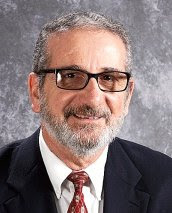
By Tabassum Rehman
In today's fast paced computer age, communication seems to be the key for survival and growth. Communication between the chapters of the Islamic Council of Ohio is what Br. Souhail Khan and other delegates had in mind when they established the Ohio Muslim Network on Saturday, March 18th, 1995.
The aim of this network is to connect all of Ohio's Muslim organizations. Right now, this includes organizations in Springfield, Akron, Dayton, Cincinnati, Cleveland, and others. It can include the MSA in the future, but, as Br. Souhail explained, the Network is starting out in a simple manner. They will see how it works and evaluate it after 3 months. In the future, they may also add a bulletin board.
Why create an Ohio Muslim Network when we already have the MSA and Sisters' Nets? Br. Souhail explained that he and his colleagues wanted to be "proactive" to react to situations. "So we can take action before things happen." The example he gave of this proactive approach was monitoring bills in Congress and finding out how they are going to affect our Muslim communities. the network will also be used for da'wah work. All in all, it will provide a means for faster communication between Ohio Muslim organizations, and Insha'allah, if everything goes well, for all the Muslims in Ohio as well.
The current agenda is to publish a book with E-mail addresses of Muslims in Ohio. If anyone would like to include their E-mail address in the publication, please E-mail Br. Souhail Khan at *******.
May Allah (SWT) help their efforts.
Saturday, April 24, 2010

Monday, April 19, 2010
April 1995 ISGC Constitution Vote
by Khaled Farag
The Muslim community in central Ohio has grown dramatically in the last few years. The average Jumma Prayer is now attended by at least 450 people. at least 3000 people attended the Eid prayer on March 3. During Ramadan, Omar Mosque was regularly occupied to its fullest capacity. Omar Ibn El-Khattab Children School had 132 children registered this fall. The school administration had to deal with multiple shifts to accommodate the lack of space.
The mosque structure itself is in its old age and the cost of regular maintenance required just to maintain it is increasing. In one year we learned that we need several thousand dollars to repair the parking lot's cracking pavement. Several thousand dollars are needed to change the carpet. Recently, it was concluded that a new roof, which will cost more than $7000, will be needed very soon.
The most serious problem the community is facing today is the dramatic change in the type of services the MSA does for the community at large and the massive demand for services. This is all happening while the number of willing volunteers to do the work is declining.
I told a friend once that I was the president of a student organization called the MSA. He then asked me what type of activities do we do as an organization. When he learned that this small humble "student" organization operates a "church" of 400 professional and student patrons coming from at least 80 different countries, marries people, buries people when they die, mediates family disputes and provides counseling, raises on average $100,000 a year for international relief, organizes every Friday two off-site congregational prayers, conducts at least 4 weekly study sessions "halaqas", operates a weekend school for 132 children... My friend interrupted me and asked, "Whom was I kidding?" He continued to say, "You are obviously not describing a student organization. What you have is a small independent community."
The fact that the community has outgrown Omar Mosque in size and capacity is not new news for many. For that reason, in 1989, the MSA executive committee commissioned a task force to plan and work on long term solutions for the administrative and capacity problems the community is facing. the task force developed a plan to expand the structural assets of the community to accommodate its growth. The task force studied primarily the construction, development and operation of a full time Islamic school and the acquisition of a new Mosque-Community center complex with all the associated administrative and financial needs.
The Muslim community in central Ohio has grown dramatically in the last few years. The average Jumma Prayer is now attended by at least 450 people. at least 3000 people attended the Eid prayer on March 3. During Ramadan, Omar Mosque was regularly occupied to its fullest capacity. Omar Ibn El-Khattab Children School had 132 children registered this fall. The school administration had to deal with multiple shifts to accommodate the lack of space.
The mosque structure itself is in its old age and the cost of regular maintenance required just to maintain it is increasing. In one year we learned that we need several thousand dollars to repair the parking lot's cracking pavement. Several thousand dollars are needed to change the carpet. Recently, it was concluded that a new roof, which will cost more than $7000, will be needed very soon.
The most serious problem the community is facing today is the dramatic change in the type of services the MSA does for the community at large and the massive demand for services. This is all happening while the number of willing volunteers to do the work is declining.
I told a friend once that I was the president of a student organization called the MSA. He then asked me what type of activities do we do as an organization. When he learned that this small humble "student" organization operates a "church" of 400 professional and student patrons coming from at least 80 different countries, marries people, buries people when they die, mediates family disputes and provides counseling, raises on average $100,000 a year for international relief, organizes every Friday two off-site congregational prayers, conducts at least 4 weekly study sessions "halaqas", operates a weekend school for 132 children... My friend interrupted me and asked, "Whom was I kidding?" He continued to say, "You are obviously not describing a student organization. What you have is a small independent community."
The fact that the community has outgrown Omar Mosque in size and capacity is not new news for many. For that reason, in 1989, the MSA executive committee commissioned a task force to plan and work on long term solutions for the administrative and capacity problems the community is facing. the task force developed a plan to expand the structural assets of the community to accommodate its growth. The task force studied primarily the construction, development and operation of a full time Islamic school and the acquisition of a new Mosque-Community center complex with all the associated administrative and financial needs.
The acquisition of such assets required clear and perfected plans to manage and operate such facilities. The task force recommended to the MSA general assembly the complete restructuring and the overhaul of the existing management style of the MSA. The idea was to reorganize the MSA to accomplish the following goals:
- Preserve all the excellent Islamic characteristics and actions the community has developed and accomplished in Central Ohio over the years.
- Expand the opportunity for the professional members of the community to undertake a more active role in the leadership and service of this community.
- Re-energize and enrich the Muslim activities in the local universities and colleges. Such activities have almost been abandoned due to the work load of the members of the MSA with community projects.
- Provide a flexible and stable platform for the establishment of the full time Islamic school.
Guard the Islamic assets (waqf) and guarantee that such assets grow and remain in Muslim hands. - Initiate financial investment plans for the community to financially sustain the operation of the organization.
In early 1994, the MSA General Assembly accepted a proposal to reorganize the MSA under a new name, The Islamic Society of Greater Columbus (ISGC), and approved a new management structure that included an elected board of trustees and an executive committee. The general assembly elected initial members of the board of trustees and made a recommendation that a new detailed constitution of the organization be presented for adoption in the near future.
[ed. note: Those were Ahmed Abdullah, Hany Saqr, Khaled Farag, and Mouhamed Nabih Tarazi. See June 1994 ISGC passes with flying colors By Rached Zantout]
The Board of Trustees of ISGC organized many informal meetings with many of the brothers and sisters to brainstorm and critique several outlines for a proposed constitution. Presentations and seminars were organized for the brothers and sisters to maximize their critique and hear all suggestions.
Many models were initially at hand. After each meeting, the BOT collected the suggestions and critiques of each model. Most of the suggestions were excellent, but many of them contradicted one another and had to be integrated together to form a complete draft constitution and a set of bylaws. The notes were reconciled many times and, slowly, a skeleton of a draft constitution began to emerge.
The draft constitution was debated again in many small groups whose purpose was to eliminate the contradictions and further perfect the proposal. Many participants started with opinions that were later changed by others who debated their points through constructive criticism and mutual respect. The depth and seriousness of the analysis that these brothers and sisters gave to the proposals reflected the maturity of the Muslim community in Central Ohio. The resulting document was a constitution in its embryonic stages. Although it contained many ideas from just about everyone, many people who drafted the constitution will not agree with every detail in it. That indeed reflects the multitude of differing views on some issues and the resulting compromises. The draft constitution was then posted in the Mosque in order to be circulated for further modification and change. Written suggestions were also encouraged. Many suggestions and modification were further debated and critiqued by the BOT and the person making the suggestion before being added to the proposal. After nearly 2500 man-hours of debate, editing and critique, a semifinal proposal was presented to at least 13 members of the MSA (10%) of the number of members to read it and formally presented to the MSA executive committee.
The proposed constitution was mailed to every member with a notification of the special general assembly to be held at 9:15 pm on Friday, April 7, 1995. Since absentee ballots will not be taken, the attendance of all members is critical.
Highlights of the Proposed Constitution:
Continuity of the growth of the Muslim Community in Central Ohio. this will be the result of stable Islamic leadership and will ease focusing on long term community goals.
The restructured MSA under the name ISGC will basically have the community manage its affairs by Shura practiced on every matter. the community will elect representatives to a shura council. The representatives are called General Body Representatives (GBR). The shura council elects a president of the executive committee. The president, once elected, will select the remaining members of the executive committee and seek their confirmation by the (GBR). The executive committee remains the manager of the day to day affairs of the community. The role of the BOT will primarily be the long term planning for the community and protection of the Islamic waqf entrusted to the community.
The new structure of the organization allows the creation of additional affiliate organizations to professionally manage and operate future projects such as a full time Islamic School, day care centers, Islamic cemeteries, and financial investments for the community to sustain its growth.
ISGC structure allows other Islamic Organizations willing to affiliate with or join ISGC by name or by effort to complement and accelerate the developed growth of the Muslim community. the student members of ISGC can focus on Islamic Dawah on the campuses in Central Ohio. Many additional MSAs will be formed while remaining inseparable parts of ISGC.
[Ed. note: Main differences between MSA and ISGC: non-student members, new General Body from which elections are made, Veto Powers to BOT, and Quotas for students]
Saturday, April 10, 2010
March 1995 Good-bye Ramadan, Hello Easy Life?
by Rached Zantout
[ed. note: Sheikh Shaker, Ahmad, and Aisha are imaginary figures]
"Asalaam alaikum Sheikh Shaker, I would like to congratulate you on your Eid Khutbah. It was, as usual, very powerful. You made me feel for my Muslim brothers and sisters here and abroad. Wallahi, my heart is crying for them."
"Asalaam alaikum Ahmad, how are you doing? Jazakum Allahu Khairan but things that I said that are true are from Allah and all mistakes are because of my shortcomings."
"Alhamdulillah, Sheikh Shaker, Allah (SWT) kept us alive to observe Ramadan and pray Eid. we gained so much in this blessed month. Fasting, taraweeh, quiyam, itikaf, Reading a lot of Quran, zakat ul-fitr, zakat ul-mal, jumaa prayers. praying in congregation more often, attending fajr prayers. This month always brings the good stuff in me," said Ahmad.
"Subhanallah," replied Sheikh Shaker, "This month does that to all of us. Even the prophet (PBUH) was more generous during Ramadan, although he was still the most generous man. He would increase his worship during Ramadan and especially during the last ten days."
"Alhamdulillah," replied Ahmad. "Now I can go back to my usual schedule and relax a little bit. I feel like I have done my job for the year. I will be anxiously I waiting for the next Ramadan."
"You know, Ahmad, the Prophet I (PBUH) used to work all year. He used to fight for the cause of Allah, preach to Muslims and Non-Muslims, take care of the Muslims affairs, his family's, and his own affairs. He even had the time to fix his own shoes." said Sheikh Shaker.
What? The prophet used to do that? I always imagined he was a very powerful man, sitting on his throne with servants doing everything he wished. How did he find the time to do all of those things? Ah, he did not have to go to school and do all the homework and projects, that's how." said Ahmad.
"Tell me, Ahmad, did you slacken on your homework or Projects during Ramadan?" asked Sheikh Shaker.
"No," answered Ahmad, "before Ramadan began, I knew that I had to devote the nights after Maghrib to praying Taraweeh and Quiyam, so I made my schedule so that I woke up at Fajr and finished all my school studying. You know what? I was so fresh after Fajr, that I even had the time to read 20 minutes of Qur'an . before going to classes. "
"That is because Allah (SWT) puts barakah in your time and makes you finish things faster when you obey Him and worship Him more," answered Sheikh Shaker.
"I wish the whole year was like Ramadan so that I could do more in less time," exclaimed Ahmad. "But the problem is that after Ramadan is finished, there is no more taraweeh or quiyam. the brothers and sisters tend to go about their own business. I start missing more congregational prayers. I don't attend fajr at the masjid and become more involved in my day to day activities. I guess it is partly the fact that there is less worship to do outside Ramadan."
"You know Ahmad, the Prophet (PBUH) taught us that not only prayers, paying zakat, hajj and fasting are acts of worship. Everything you do can be a kind of worship for the sake of Allah, if you perform it with the right intention." explained Sheikh Shaker, "Your studies can be for the sake of Allah, playing sports can be for the sake of Allah, even eating and drinking can be for the sake of Allah, provided you have the right intentions that you want to benefit Muslims with the knowledge, strength or power you are acquiring. And you should also have the intention of using what you gain through those acts in something that Allah would be pleased with. You know that the prophet (PBUH) even told us that removing harmful things from the path of people, Muslims or non-Muslims alike, is an act of worship!"
"You know Sheikh Shaker, you are right, I can keep the same pace I gained in Ramadan throughout the year. But..." Ahmad asked, "I don't know what is needed to be done and whether I can do it."
"I was talking to Br. Khaled, our MSA president, a few days ago, and it seems that the masjid needs a lot of things to be done," explained Sheikh Shaker. " He told me that the MSA is overwhelmed with things to be done and urgent projects, but they are getting little assistance from the 500 or so brothers and sisters that attend Jumaa prayers, taraweeh prayers, and the MSA iftars. In fact, I know that only a handful of people are doing the activities you are seeing."
"But... we never know about it. They do not announce it. I make sure to read every bit of paper on the notice board in the masjid. I never saw that they needed any help." said Ahmad.
"You are right," agreed Sheikh Shaker, "but that is not an excuse for us. Even if they are not doing their job properly, we should go and ask them to assign duties to us. After all, it is our masjid and they are only our elected representatives to organize the work and activities around the masjid. I heard Br. Abdullah, when I visited him last week, saying that they had many projects to be done," added Sheikh Shaker. They are trying to:
• Build a mailing list so that they can reach more Muslims in central Ohio.
• Organized the cataloging of all books in the library and build a computer database so that brothers and sisters can find books more easily.
• Run a weekend school. They need help from parents to obey the rules, like dropping their kids off on time and in the masjid's parking lot, not on the street. They also need volunteers to help the school staff, and to clean up at the end of school.
• Organize a boys group for older boys. A small group of boys are trying to organize all by themselves but they need guidance and help from older brothers with some free time, to help them conduct a study group and some regular game time for sports.
• Organize a summer program for Muslim Youth in Columbus. They need volunteers to escort children on field trips, prepare food or watch over children during indoor activities.
• Maintain the weekly halaqahs on Saturdays and Fridays. They need brothers and sisters to attend those halaqahs and participate in giving lectures.
• Organize dawah tables at the unions in central Ohio colleges and universities. They need volunteers to sit there and answer questions, help prepare pamphlets and follow up with interested non-Muslims.
• Maintain the masjid. Part of the roof is leaking and they need donations, ideas, expertise, and manpower to fix it. The parking lot needs to be cleaned regularly, the holes need to be filled, the top resurfaced and the lawns mowed. The gutters need some work to be cleaned and repaired. Helping even with small things like buying supplies for the masjid, cleaning the bathrooms or carpet need volunteers. The children's playground needs to be repaired. Many children play in it during spring and summer. Even the inside of the mosque needs some work. The MSA has been talking for a long time about changing the carpet where we pray. They need also to clean and paint the shoe racks after the dirt built up from the shoes made them look ugly. they need volunteers who will improve the look of the mosque by doing some landscaping and some reorganizing of the inside of the mosque.
• Maintain a Xerox machine, a computer and a fax machine for the use of the Muslim brothers and sisters in the mosque.
• Organize the Eid prayers. This activity alone needs more than 20 brothers and sisters to go smoothly. Jazakum Allahu Khairan, they have been doing with far less brothers and sisters. They need more volunteers to make it better.
• Maintain a positive image of Muslims in central Ohio, nationwide, and worldwide. They have established a media committee for that purpose. However, they still need volunteers to locate articles about Muslims, write press releases to the media, and formulate a good strategy for dealing with the media."
"Ma shaa' Allah", Ahmad exclaimed, "All of that and we didn't know about it? Inshallah, I will contact the MSA and see what I can do."
"Asalaam alaikum Sheikh Shaker, Asalaam alaikum Ahmad. Ahmad! Daddy says that we need to go soon so you'd better come."
"Asalaam alaikum. Aren't you Aish, Ahmad's sister?" said Sheikh Shaker.
"Yes Sheikh Shaker," said Aisha.
"Sis, we were talking about the community needs and Sheikh Shaker explained to me how the masjid and the community in general are in need of every minute we have," said Ahmad.
"Wallahi, I was thinking about that same issue as I was hearing your khuttbah, Sheikh Shaker," said Aisha. "You know the women's section also needs much work and we need a lot of help in our activities. I heard a sister the other day talking about the activities in the women's section. It seems that we need a lot of sisters to be able to even maintain the current activities. The sisters need help in:
• Organizing the Eid party they do every year after Eids.
• Attending and giving lectures in our halaqahs on Saturdays and Sundays.
• Babysitting the children during the halaqahs and picnics.
• Cataloging, expanding, and organizing the children's library we started not so long ago. It even includes video and audio tapes.
• Cataloging, expanding and reorganizing the sister's library including the audio and video sections.
• Organizing the fundraising activities that we do every year, like selling food after jumaa prayers for the benefit of the masjid. The yearly bazaar at the beginning of Fall. Did you know that we ask all sisters who are going abroad to bring us Islamic items from overseas and we sell them for the benefit of our mosque?
• We need help in maintaining and fixing things in the sister's section of the mosque too, or at least volunteers to report defected things to the MSA so the brothers can fix them.
"Ahmad, Aisha, Come on. We have to go visit our brothers and sisters and congratulate them for Eid," shouted their father from their car. "Asalaam alaikum Sheikh Shaker. Sorry for interrupting but we have appointments."
"Jazakum Allahu Khairan Abu Ahmad. A true Muslim always keeps his appointments, and especially when one of them is to visit me at my house after Asr Prayers."
They all laughed and Ahmad and Aisha hurried back to their father's car after they said salaam the Sheikh Shaker. They had learned a lot form their small talk after the Eid prayer. They had made a promise between themselves and Allah that they would devote more time to benefiting the mosque and the Muslim community in general. They even started at that moment by smiling at every Muslim or Muslimah they encountered as the Prophet told them that smiling when you meet a Muslim brother or sister is a donation (sadaqah).
[ed. note: Sheikh Shaker, Ahmad, and Aisha are imaginary figures]
"Asalaam alaikum Sheikh Shaker, I would like to congratulate you on your Eid Khutbah. It was, as usual, very powerful. You made me feel for my Muslim brothers and sisters here and abroad. Wallahi, my heart is crying for them."
"Asalaam alaikum Ahmad, how are you doing? Jazakum Allahu Khairan but things that I said that are true are from Allah and all mistakes are because of my shortcomings."
"Alhamdulillah, Sheikh Shaker, Allah (SWT) kept us alive to observe Ramadan and pray Eid. we gained so much in this blessed month. Fasting, taraweeh, quiyam, itikaf, Reading a lot of Quran, zakat ul-fitr, zakat ul-mal, jumaa prayers. praying in congregation more often, attending fajr prayers. This month always brings the good stuff in me," said Ahmad.
"Subhanallah," replied Sheikh Shaker, "This month does that to all of us. Even the prophet (PBUH) was more generous during Ramadan, although he was still the most generous man. He would increase his worship during Ramadan and especially during the last ten days."
"Alhamdulillah," replied Ahmad. "Now I can go back to my usual schedule and relax a little bit. I feel like I have done my job for the year. I will be anxiously I waiting for the next Ramadan."
"You know, Ahmad, the Prophet I (PBUH) used to work all year. He used to fight for the cause of Allah, preach to Muslims and Non-Muslims, take care of the Muslims affairs, his family's, and his own affairs. He even had the time to fix his own shoes." said Sheikh Shaker.
What? The prophet used to do that? I always imagined he was a very powerful man, sitting on his throne with servants doing everything he wished. How did he find the time to do all of those things? Ah, he did not have to go to school and do all the homework and projects, that's how." said Ahmad.
"Tell me, Ahmad, did you slacken on your homework or Projects during Ramadan?" asked Sheikh Shaker.
"No," answered Ahmad, "before Ramadan began, I knew that I had to devote the nights after Maghrib to praying Taraweeh and Quiyam, so I made my schedule so that I woke up at Fajr and finished all my school studying. You know what? I was so fresh after Fajr, that I even had the time to read 20 minutes of Qur'an . before going to classes. "
"That is because Allah (SWT) puts barakah in your time and makes you finish things faster when you obey Him and worship Him more," answered Sheikh Shaker.
"I wish the whole year was like Ramadan so that I could do more in less time," exclaimed Ahmad. "But the problem is that after Ramadan is finished, there is no more taraweeh or quiyam. the brothers and sisters tend to go about their own business. I start missing more congregational prayers. I don't attend fajr at the masjid and become more involved in my day to day activities. I guess it is partly the fact that there is less worship to do outside Ramadan."
"You know Ahmad, the Prophet (PBUH) taught us that not only prayers, paying zakat, hajj and fasting are acts of worship. Everything you do can be a kind of worship for the sake of Allah, if you perform it with the right intention." explained Sheikh Shaker, "Your studies can be for the sake of Allah, playing sports can be for the sake of Allah, even eating and drinking can be for the sake of Allah, provided you have the right intentions that you want to benefit Muslims with the knowledge, strength or power you are acquiring. And you should also have the intention of using what you gain through those acts in something that Allah would be pleased with. You know that the prophet (PBUH) even told us that removing harmful things from the path of people, Muslims or non-Muslims alike, is an act of worship!"
"You know Sheikh Shaker, you are right, I can keep the same pace I gained in Ramadan throughout the year. But..." Ahmad asked, "I don't know what is needed to be done and whether I can do it."
"I was talking to Br. Khaled, our MSA president, a few days ago, and it seems that the masjid needs a lot of things to be done," explained Sheikh Shaker. " He told me that the MSA is overwhelmed with things to be done and urgent projects, but they are getting little assistance from the 500 or so brothers and sisters that attend Jumaa prayers, taraweeh prayers, and the MSA iftars. In fact, I know that only a handful of people are doing the activities you are seeing."
"But... we never know about it. They do not announce it. I make sure to read every bit of paper on the notice board in the masjid. I never saw that they needed any help." said Ahmad.
"You are right," agreed Sheikh Shaker, "but that is not an excuse for us. Even if they are not doing their job properly, we should go and ask them to assign duties to us. After all, it is our masjid and they are only our elected representatives to organize the work and activities around the masjid. I heard Br. Abdullah, when I visited him last week, saying that they had many projects to be done," added Sheikh Shaker. They are trying to:
• Build a mailing list so that they can reach more Muslims in central Ohio.
• Organized the cataloging of all books in the library and build a computer database so that brothers and sisters can find books more easily.
• Run a weekend school. They need help from parents to obey the rules, like dropping their kids off on time and in the masjid's parking lot, not on the street. They also need volunteers to help the school staff, and to clean up at the end of school.
• Organize a boys group for older boys. A small group of boys are trying to organize all by themselves but they need guidance and help from older brothers with some free time, to help them conduct a study group and some regular game time for sports.
• Organize a summer program for Muslim Youth in Columbus. They need volunteers to escort children on field trips, prepare food or watch over children during indoor activities.
• Maintain the weekly halaqahs on Saturdays and Fridays. They need brothers and sisters to attend those halaqahs and participate in giving lectures.
• Organize dawah tables at the unions in central Ohio colleges and universities. They need volunteers to sit there and answer questions, help prepare pamphlets and follow up with interested non-Muslims.
• Maintain the masjid. Part of the roof is leaking and they need donations, ideas, expertise, and manpower to fix it. The parking lot needs to be cleaned regularly, the holes need to be filled, the top resurfaced and the lawns mowed. The gutters need some work to be cleaned and repaired. Helping even with small things like buying supplies for the masjid, cleaning the bathrooms or carpet need volunteers. The children's playground needs to be repaired. Many children play in it during spring and summer. Even the inside of the mosque needs some work. The MSA has been talking for a long time about changing the carpet where we pray. They need also to clean and paint the shoe racks after the dirt built up from the shoes made them look ugly. they need volunteers who will improve the look of the mosque by doing some landscaping and some reorganizing of the inside of the mosque.
• Maintain a Xerox machine, a computer and a fax machine for the use of the Muslim brothers and sisters in the mosque.
• Organize the Eid prayers. This activity alone needs more than 20 brothers and sisters to go smoothly. Jazakum Allahu Khairan, they have been doing with far less brothers and sisters. They need more volunteers to make it better.
• Maintain a positive image of Muslims in central Ohio, nationwide, and worldwide. They have established a media committee for that purpose. However, they still need volunteers to locate articles about Muslims, write press releases to the media, and formulate a good strategy for dealing with the media."
"Ma shaa' Allah", Ahmad exclaimed, "All of that and we didn't know about it? Inshallah, I will contact the MSA and see what I can do."
"Asalaam alaikum Sheikh Shaker, Asalaam alaikum Ahmad. Ahmad! Daddy says that we need to go soon so you'd better come."
"Asalaam alaikum. Aren't you Aish, Ahmad's sister?" said Sheikh Shaker.
"Yes Sheikh Shaker," said Aisha.
"Sis, we were talking about the community needs and Sheikh Shaker explained to me how the masjid and the community in general are in need of every minute we have," said Ahmad.
"Wallahi, I was thinking about that same issue as I was hearing your khuttbah, Sheikh Shaker," said Aisha. "You know the women's section also needs much work and we need a lot of help in our activities. I heard a sister the other day talking about the activities in the women's section. It seems that we need a lot of sisters to be able to even maintain the current activities. The sisters need help in:
• Organizing the Eid party they do every year after Eids.
• Attending and giving lectures in our halaqahs on Saturdays and Sundays.
• Babysitting the children during the halaqahs and picnics.
• Cataloging, expanding, and organizing the children's library we started not so long ago. It even includes video and audio tapes.
• Cataloging, expanding and reorganizing the sister's library including the audio and video sections.
• Organizing the fundraising activities that we do every year, like selling food after jumaa prayers for the benefit of the masjid. The yearly bazaar at the beginning of Fall. Did you know that we ask all sisters who are going abroad to bring us Islamic items from overseas and we sell them for the benefit of our mosque?
• We need help in maintaining and fixing things in the sister's section of the mosque too, or at least volunteers to report defected things to the MSA so the brothers can fix them.
"Ahmad, Aisha, Come on. We have to go visit our brothers and sisters and congratulate them for Eid," shouted their father from their car. "Asalaam alaikum Sheikh Shaker. Sorry for interrupting but we have appointments."
"Jazakum Allahu Khairan Abu Ahmad. A true Muslim always keeps his appointments, and especially when one of them is to visit me at my house after Asr Prayers."
They all laughed and Ahmad and Aisha hurried back to their father's car after they said salaam the Sheikh Shaker. They had learned a lot form their small talk after the Eid prayer. They had made a promise between themselves and Allah that they would devote more time to benefiting the mosque and the Muslim community in general. They even started at that moment by smiling at every Muslim or Muslimah they encountered as the Prophet told them that smiling when you meet a Muslim brother or sister is a donation (sadaqah).
Monday, April 5, 2010
March 1995 Ramadan Harvest
A survey of some of the workers in Ramadan - Four Weeks of Labor + Pure Intention = Eternal Relaxation
by Ayman Ismail
A sense of place is closely attached to its physical as well as its psychological (or spiritual) characteristics. Ramadan memories are always distinct because they concentrate a rich blend of spirituality and action such as prayer in congregation, quiyam, qonoot. They occur at a unique place (the mosque) and are shared by a homogeneous group of souls surrounded by mutual love and affection for Allah.
Who can forget the happy moments when hands reach out together for that first date that breaks the fast, the heart shattering sounds of Quran reciting by Brs. Samy, Yasin, and Mahmoud echoing during Taraweeh prayer, the soul-charging short talks after the forth raqaa, Hani Saqr's cheerful Friday nights with the Seerah of the Prophet (PBUH) and those tranquil pious nights of I'tikaf. Without a doubt, a remarkable environment to anyone, even to an outsider.
However, this environment is not ad-hoc. Hard working individuals devoted their time, effort and foresaw their own satisfaction and comfort to accomplish a single job, like organizing iftar or preparing a halaqa or finding the imam. Who were some of these 'knights', and how did this experience affect them as individuals? What have they learned from it and to what extent did they encounter trouble? In this article IQRA! interviewed some of those 'servants of Allah', not just to acknowledge their effort (may Allah reward them for it), but also to understand the meaning of working for His sake and learning from our won hands-on experience so that our community continues to grow.
Perhaps the most noticeable duty during the fasting month was the 'break-fasting man'!
Title: iftar coordinator, detail: organize iftar, distribute food, clean up. time: 3-4 hours daily. Count: 20 iftar days, 2400 meals served.
Br. Bassam Abdallah, with his team of 'warriors' had the impossible task of satisfying everyone's hunger and thirst efficiently and equitably! Bassam and his dedicated team of brothers (may Allah reward them all) worked 20 days during Ramadan, preparing the cutlery, paper rolls, transporting, allocating, distributing the food and cleaning up the masjid. Bassam was generally pleased with the participation of the community in cooking for the meals, especially during the last ten days which were booked daily. However, he hoped that everybody would help in the clean-up. "It was annoying t see some just sitting against the wall watching those doing all the work! Sometimes I lost my temper, but in the end the feeling I got from seeing fasting people satisfied was great!"
This experience definitely changed both the way he perceived people's attitude and the way he behaved with them. "Astaghfirullah!" he said, smiling, when he was asked about people's manners. "One really has learned patience!" Next year, if he were to do this again, he would organize this differently. "Every member of the food distribution team should rotate leadership of the distribution process. There are too any opinions that confuse everyone and lower the efficiency."
Br. Bassam is engaged to a sister from Lebanon. May Allah complete their marriage in happiness and bring them together in peace.
Title: prayer imam. Detail: Lead Taraweeh prayer. Remarks: imam of mosque in Saudi Arabia, majors in English as a second language.
Away from the messy food stuff and more into spirituality, Br. Sami Al Mubareek was our imal for many of the Taraweeh prayers. A delightful new addition to our Columbus community from Saudi Arabia. He brought along a sensational voice and tilawaa that penetrated the hears with Quran's meanings. Br. Sami is a recent 'hafiz' (memorizer) of Quran. He owes that gift to a halaqa in Al-Hofouf, western Saudi Arabia and a Syrian Moqri'e (Quran teacher).
"Memorizing the book of Allah is not easy, and it is easily forgotten. I have to constantly remind myself by practice over and over again," he says.
Although he heard a lot about Columbus from his brother Khalid, who studies at OSU, Sami was impressed by the commitment of the Columbus Muslim community. Sami, a graduate of Arts majoring in English, is here to study for a Masters in English as a Second Language. He was an imam of a mosque in Al-Hofouf and gave khutbahs there.
Sami is married in Saudi Arabia and has two children. He is currently staying with his brother and making sure that his brother's life is in full accordance with Islam.
Title: MSA secretary. Detail: you name it, he did it! Time: 1-2 hours daily.
From an organizational standpoint, the MSA made a tremendous effort in putting the Ramadan team together. IQRA! tried to interview many of the MSA staff during Ramadan, but it was virtually impossible to get a few minutes of their time. "I really have so much to do," said Khalid Farag, MSA President as he dashed off chasing one MSA staff member.
Rached Zantout, being also on IQRA! staff, was contacted through e-mail. Informally, MSA staff complain from lack of responsible 'labor force'. According to Rached, the total number of assignments is 65 people in the various committees and subcommittees, "but when you remove the overlap of individuals who serve on many committees simultaneously, the number is much less than that," he said. "Basically, everyone is doing everything. There is no clear definition of responsibility," he complained.
financially, Ramadan has not yet materialized as a donation month. Br. Ali Rubaian, MSA treasurer observes that beside the zakat box, donations in the masjid have not increased during this month! He explained that ever since the Friday prayer moved to Bethel Road, the donation boxes became almost empty. "One can assume that those who donate are not the ones who regularly come to the mosque!" he said.
It is not possible to acknowledge all those who served Allah during this month. One can only pray to Allah "Oh Allah! Reward the one who spends in your cause freely!" and hope that more and more Muslims will seek this reward.
by Ayman Ismail
A sense of place is closely attached to its physical as well as its psychological (or spiritual) characteristics. Ramadan memories are always distinct because they concentrate a rich blend of spirituality and action such as prayer in congregation, quiyam, qonoot. They occur at a unique place (the mosque) and are shared by a homogeneous group of souls surrounded by mutual love and affection for Allah.
Who can forget the happy moments when hands reach out together for that first date that breaks the fast, the heart shattering sounds of Quran reciting by Brs. Samy, Yasin, and Mahmoud echoing during Taraweeh prayer, the soul-charging short talks after the forth raqaa, Hani Saqr's cheerful Friday nights with the Seerah of the Prophet (PBUH) and those tranquil pious nights of I'tikaf. Without a doubt, a remarkable environment to anyone, even to an outsider.
However, this environment is not ad-hoc. Hard working individuals devoted their time, effort and foresaw their own satisfaction and comfort to accomplish a single job, like organizing iftar or preparing a halaqa or finding the imam. Who were some of these 'knights', and how did this experience affect them as individuals? What have they learned from it and to what extent did they encounter trouble? In this article IQRA! interviewed some of those 'servants of Allah', not just to acknowledge their effort (may Allah reward them for it), but also to understand the meaning of working for His sake and learning from our won hands-on experience so that our community continues to grow.
Perhaps the most noticeable duty during the fasting month was the 'break-fasting man'!
Title: iftar coordinator, detail: organize iftar, distribute food, clean up. time: 3-4 hours daily. Count: 20 iftar days, 2400 meals served.
Br. Bassam Abdallah, with his team of 'warriors' had the impossible task of satisfying everyone's hunger and thirst efficiently and equitably! Bassam and his dedicated team of brothers (may Allah reward them all) worked 20 days during Ramadan, preparing the cutlery, paper rolls, transporting, allocating, distributing the food and cleaning up the masjid. Bassam was generally pleased with the participation of the community in cooking for the meals, especially during the last ten days which were booked daily. However, he hoped that everybody would help in the clean-up. "It was annoying t see some just sitting against the wall watching those doing all the work! Sometimes I lost my temper, but in the end the feeling I got from seeing fasting people satisfied was great!"
This experience definitely changed both the way he perceived people's attitude and the way he behaved with them. "Astaghfirullah!" he said, smiling, when he was asked about people's manners. "One really has learned patience!" Next year, if he were to do this again, he would organize this differently. "Every member of the food distribution team should rotate leadership of the distribution process. There are too any opinions that confuse everyone and lower the efficiency."
Br. Bassam is engaged to a sister from Lebanon. May Allah complete their marriage in happiness and bring them together in peace.
Title: prayer imam. Detail: Lead Taraweeh prayer. Remarks: imam of mosque in Saudi Arabia, majors in English as a second language.
Away from the messy food stuff and more into spirituality, Br. Sami Al Mubareek was our imal for many of the Taraweeh prayers. A delightful new addition to our Columbus community from Saudi Arabia. He brought along a sensational voice and tilawaa that penetrated the hears with Quran's meanings. Br. Sami is a recent 'hafiz' (memorizer) of Quran. He owes that gift to a halaqa in Al-Hofouf, western Saudi Arabia and a Syrian Moqri'e (Quran teacher).
"Memorizing the book of Allah is not easy, and it is easily forgotten. I have to constantly remind myself by practice over and over again," he says.
Although he heard a lot about Columbus from his brother Khalid, who studies at OSU, Sami was impressed by the commitment of the Columbus Muslim community. Sami, a graduate of Arts majoring in English, is here to study for a Masters in English as a Second Language. He was an imam of a mosque in Al-Hofouf and gave khutbahs there.
Sami is married in Saudi Arabia and has two children. He is currently staying with his brother and making sure that his brother's life is in full accordance with Islam.
Title: MSA secretary. Detail: you name it, he did it! Time: 1-2 hours daily.
From an organizational standpoint, the MSA made a tremendous effort in putting the Ramadan team together. IQRA! tried to interview many of the MSA staff during Ramadan, but it was virtually impossible to get a few minutes of their time. "I really have so much to do," said Khalid Farag, MSA President as he dashed off chasing one MSA staff member.
Rached Zantout, being also on IQRA! staff, was contacted through e-mail. Informally, MSA staff complain from lack of responsible 'labor force'. According to Rached, the total number of assignments is 65 people in the various committees and subcommittees, "but when you remove the overlap of individuals who serve on many committees simultaneously, the number is much less than that," he said. "Basically, everyone is doing everything. There is no clear definition of responsibility," he complained.
financially, Ramadan has not yet materialized as a donation month. Br. Ali Rubaian, MSA treasurer observes that beside the zakat box, donations in the masjid have not increased during this month! He explained that ever since the Friday prayer moved to Bethel Road, the donation boxes became almost empty. "One can assume that those who donate are not the ones who regularly come to the mosque!" he said.
It is not possible to acknowledge all those who served Allah during this month. One can only pray to Allah "Oh Allah! Reward the one who spends in your cause freely!" and hope that more and more Muslims will seek this reward.
Sunday, April 4, 2010
Feb 1995 Dear Editor
A suggestion for Iftar
Asalaam alaikum,
With Ramadan rabidly approaching, I would like to make a few comments about breaking our fasts at the masjid. We should try to make it a positive experience shared by everyone in the community. An effort to alleviate some of the problems of having a large gathering of women in such a small area would be to set up tables. Having tables in the women's meeting room and the food in the smaller room would accommodate more sisters, increase mobility and thereby eliminate some of the spills on the carpet from sisters and children stepping over plates and each other.
Also, in the past I have seen sisters put too much food on plates for themselves or their children. They take a large portion of one certain food item specifically. the child ends up taking a bite or two and is off to play with friends. The food is wasted and a chance for sisters to taste a new food is lost. A better solution would be to feed small children before coming for iftar, and then let them sample small amounts.
Ramadan is a time for acts of kindness to others, so remember there are also fasting sisters in line behind you.
Thank you, Um-Sufyan
Interfaith Dialogue
by way of introduction, I am a professional who had the honor and privilege of visiting and working in various countries in the Arab World. I was particularly elated to have visited Lebanon in 1981, the country of my grandparents and my nationality.
Although raised in the Roman rite of the Catholic Church, I did attend the Maronite rite while in Washington, D.C. and have attended the services of the Melkite Church, the Byzantine Orthodox Church, and the Greek Orthodox Church.
When opposing the 1982 invasion of Lebanon through political channels while living in Washington, D.C., I was compelled to relay to Capitol Hill and others who had some influence on international events certain facts and principles regarding Islam that I learned through my friends and colleagues in Washington, D.C. and in my travels.
First, almost one-third of the population of this earth professes Islam as their religion. This fact would urge a normal person of intelligence to inquire on what are the tenents of Islam and to question whetehr he or she is following the same or similar religious principles or otherwise should convert. Second, the common tenents between Islam and Christianity, generally not known, would, when made known, provide a means of identification between the two peoples. For example, it is written in the Catholic Apostolic Creed, cited at Mass, and which I learned Moslems believe as well, is that Jesus Christ was born of the Blessed Virgin as had been announced to her by the Angel Gabriel. To say to a Christian that the Moslems believe in Jesus Christ is not only a profession of faith common to both religions, but also an identification with each other.
While it was explained to me that in Islam, it is not believed that Jesus Christ was the "Son of God" for how can the One God have a "son" or there be "two" Gods, perhaps there is a problem with semantics.
By all means, I hope that those who follow Islam in this hemisphere will reach out to the Catholic and to all of the Christian communities, and emphasize the common religious beliefs particularly in light of the pervasive ignorance on and mischaracterization of Islam and what Moslems do believe. Some people, despite education in the sciences or arts, do not know what Islam is or what Moslems believe. Some of the people who do influence politics believe that Moslems are some political faction or party from a country which they cannot find on the map.
If I may suggest with all due respect to send your leaders to the Christian Churches for interfaith conferences on the similarities between Christianity and Islam. In many ways, the similarities and identification may hopefully prevent or stop wars and the proliferation of destructive weapons.
Perhaps one of you could encompass some or all of these thoughts and suggestions in an article for IQRA! and advance the request and necessity for interfaith conferences on a local, national, and international level.
Sincerely, Marcell Rose Anthony (Sarkis)
Editorial response:
Dear Marcell,
Thank you for your thoughtful letter and your suggestions for more interfaith dialogue. Actually, we believe numerous meetings on interfaith understanding are ongoing, particularly with the Catholic church. The new Catholic catechism, for instance, has recognized officially that Muslims "are included in God's plan of salvation" (Columbus Dispatch, 5/28/94). It is unfortunate that religion in general is so under-reported by the media and information about such meetings is not wide spread.
Eid Prayer
Assalaam alaikum. As fasting comes to an end, we surely are thinking of Eid-ul-Fitr prayer, the gifts to share with our children, persons to invite at home, etc. However, I would like to call three problems that have been occurring during the prayer year after year:
1. The ladies at the back of the prayer hall could hardly hear the speaker.
2. To accentuate problem, babies cry and little children enjoy themselves by making noise and running around. Mothers and/or ladies do not control their offspring effectively.
3. To make matters worse, the mothers/ladies start socializing among themselves.
These problems seriously affect others who come to attend the Eid prayer and want to consentrate listening to the kutba. I would like to suggest ways to correct the problems:
1. Install adequate loudspeaker system at the back of the hall.
2. Prepare an adjacent room with a loud speaker system where mothers could participate in Eid prayer while taking care of their babies/children.
3. Socializing could be eliminated by adopting items 1 and 2.
4. In addition, an announcement should be made requesting that socializing should be conducted only after the Eid prayer has ended.
5. Another suggestion, volunteers with obvious ID tags should coordinate efforts to establish harmony during this great day.
It is about time for all of us to figure out how to effectively deal with the situation.
Sincerely, Jeannette R. Mohammed
Asalaam alaikum,
With Ramadan rabidly approaching, I would like to make a few comments about breaking our fasts at the masjid. We should try to make it a positive experience shared by everyone in the community. An effort to alleviate some of the problems of having a large gathering of women in such a small area would be to set up tables. Having tables in the women's meeting room and the food in the smaller room would accommodate more sisters, increase mobility and thereby eliminate some of the spills on the carpet from sisters and children stepping over plates and each other.
Also, in the past I have seen sisters put too much food on plates for themselves or their children. They take a large portion of one certain food item specifically. the child ends up taking a bite or two and is off to play with friends. The food is wasted and a chance for sisters to taste a new food is lost. A better solution would be to feed small children before coming for iftar, and then let them sample small amounts.
Ramadan is a time for acts of kindness to others, so remember there are also fasting sisters in line behind you.
Thank you, Um-Sufyan
Interfaith Dialogue
by way of introduction, I am a professional who had the honor and privilege of visiting and working in various countries in the Arab World. I was particularly elated to have visited Lebanon in 1981, the country of my grandparents and my nationality.
Although raised in the Roman rite of the Catholic Church, I did attend the Maronite rite while in Washington, D.C. and have attended the services of the Melkite Church, the Byzantine Orthodox Church, and the Greek Orthodox Church.
When opposing the 1982 invasion of Lebanon through political channels while living in Washington, D.C., I was compelled to relay to Capitol Hill and others who had some influence on international events certain facts and principles regarding Islam that I learned through my friends and colleagues in Washington, D.C. and in my travels.
First, almost one-third of the population of this earth professes Islam as their religion. This fact would urge a normal person of intelligence to inquire on what are the tenents of Islam and to question whetehr he or she is following the same or similar religious principles or otherwise should convert. Second, the common tenents between Islam and Christianity, generally not known, would, when made known, provide a means of identification between the two peoples. For example, it is written in the Catholic Apostolic Creed, cited at Mass, and which I learned Moslems believe as well, is that Jesus Christ was born of the Blessed Virgin as had been announced to her by the Angel Gabriel. To say to a Christian that the Moslems believe in Jesus Christ is not only a profession of faith common to both religions, but also an identification with each other.
While it was explained to me that in Islam, it is not believed that Jesus Christ was the "Son of God" for how can the One God have a "son" or there be "two" Gods, perhaps there is a problem with semantics.
By all means, I hope that those who follow Islam in this hemisphere will reach out to the Catholic and to all of the Christian communities, and emphasize the common religious beliefs particularly in light of the pervasive ignorance on and mischaracterization of Islam and what Moslems do believe. Some people, despite education in the sciences or arts, do not know what Islam is or what Moslems believe. Some of the people who do influence politics believe that Moslems are some political faction or party from a country which they cannot find on the map.
If I may suggest with all due respect to send your leaders to the Christian Churches for interfaith conferences on the similarities between Christianity and Islam. In many ways, the similarities and identification may hopefully prevent or stop wars and the proliferation of destructive weapons.
Perhaps one of you could encompass some or all of these thoughts and suggestions in an article for IQRA! and advance the request and necessity for interfaith conferences on a local, national, and international level.
Sincerely, Marcell Rose Anthony (Sarkis)
Editorial response:
Dear Marcell,
Thank you for your thoughtful letter and your suggestions for more interfaith dialogue. Actually, we believe numerous meetings on interfaith understanding are ongoing, particularly with the Catholic church. The new Catholic catechism, for instance, has recognized officially that Muslims "are included in God's plan of salvation" (Columbus Dispatch, 5/28/94). It is unfortunate that religion in general is so under-reported by the media and information about such meetings is not wide spread.
Eid Prayer
Assalaam alaikum. As fasting comes to an end, we surely are thinking of Eid-ul-Fitr prayer, the gifts to share with our children, persons to invite at home, etc. However, I would like to call three problems that have been occurring during the prayer year after year:
1. The ladies at the back of the prayer hall could hardly hear the speaker.
2. To accentuate problem, babies cry and little children enjoy themselves by making noise and running around. Mothers and/or ladies do not control their offspring effectively.
3. To make matters worse, the mothers/ladies start socializing among themselves.
These problems seriously affect others who come to attend the Eid prayer and want to consentrate listening to the kutba. I would like to suggest ways to correct the problems:
1. Install adequate loudspeaker system at the back of the hall.
2. Prepare an adjacent room with a loud speaker system where mothers could participate in Eid prayer while taking care of their babies/children.
3. Socializing could be eliminated by adopting items 1 and 2.
4. In addition, an announcement should be made requesting that socializing should be conducted only after the Eid prayer has ended.
5. Another suggestion, volunteers with obvious ID tags should coordinate efforts to establish harmony during this great day.
It is about time for all of us to figure out how to effectively deal with the situation.
Sincerely, Jeannette R. Mohammed
Feb 1995 Fasting in Columbus
[For its first issue during Ramadan as the ISGC newsletter, IQRA! staff created a two part edition with multiple spiritual articles and background information about fasting. Only one article in all of this might be considered an article about the community, and most of it is a long highly technical discussion about moon sighting. I'm omitting that technical detail, which people can access from other sources like www.moonsighting.com, and including only the short discussion of the local community issues with moon sighting. An announcements in these pages give the hotline telephone number people were urge to call to find out about when the month started and ended. There were also 3 letters to the editor this month.]
Sighting the Community
Why is there more than one day for the start of Ramadan in the same city? I called HOME and the month of .... has already started!!! Should I fast with them or should I fast with the local community? Why can't we just follow astronomical calculations to start the month?
These are probably some of the most common questions that we hear every year with the start of Ramadan. This occurs in the U.S. because there is no single Islamic authority, its area covers various time zones, and there are so many nationalistic entities that remain attached to their homes rather than to the local community. The issue could easily be a DIVIDING FACTOR for Muslims to the extent that in one apartment in Chicago three roommates fasted on different days. This year, Columbus performed better than last year in preparation for the moon sighing event. These efforts were characterized by organization, responsibility, and openness. The fruits of that effort were clearly apparent in the smoothness with which the decision was transmitted to the community, the speed with which the decision was taken after a brother witnessed the crescent, the voicemail which never gave a busy signal, and the media coverage in IV (Channel 10), radio (NPR Weekly Edition) and press (the Columbus Dispatch). However, some people still fasted with other overseas countries, and not with the local community.
To clarify this issue, IQRA! contacted Dr. Mohib Durrani, an Islamic scholar of Columbia University, who has been researching the issue for years and currently works with ISNA for the moon sighting committee. He demonstrates how the astronomical method (Al-hesab Al-falaky) can be reconciled with the fiqh rul, (somo le-rou'yateh, was afteroo le-rou'yeth) and support it instead of contradict it. [this introduction is followed by a very detailed long discussion of the issues.]
Community Eid Dinner with the Islamic Center
at Whitehall Community Center off Hamilton Rd. in Whitehall Park, Saturday, March 4th.
Magrib prayer with be at 6:30 followed by a potluck dinner. A children's program is planned with the traditional clown entertainment, goody bags, and pizza for all.
MSA Children' Eid Party
Sunday March 5th at 12:00 noon. Songs and theater skits presented by the Arab sisters' halaqah for women and chldren. The Hall must be left clean and vacted by 2:00 so please come promptly at noon to avoid missing any of the snow.
Sighting the Community
Why is there more than one day for the start of Ramadan in the same city? I called HOME and the month of .... has already started!!! Should I fast with them or should I fast with the local community? Why can't we just follow astronomical calculations to start the month?
These are probably some of the most common questions that we hear every year with the start of Ramadan. This occurs in the U.S. because there is no single Islamic authority, its area covers various time zones, and there are so many nationalistic entities that remain attached to their homes rather than to the local community. The issue could easily be a DIVIDING FACTOR for Muslims to the extent that in one apartment in Chicago three roommates fasted on different days. This year, Columbus performed better than last year in preparation for the moon sighing event. These efforts were characterized by organization, responsibility, and openness. The fruits of that effort were clearly apparent in the smoothness with which the decision was transmitted to the community, the speed with which the decision was taken after a brother witnessed the crescent, the voicemail which never gave a busy signal, and the media coverage in IV (Channel 10), radio (NPR Weekly Edition) and press (the Columbus Dispatch). However, some people still fasted with other overseas countries, and not with the local community.
To clarify this issue, IQRA! contacted Dr. Mohib Durrani, an Islamic scholar of Columbia University, who has been researching the issue for years and currently works with ISNA for the moon sighting committee. He demonstrates how the astronomical method (Al-hesab Al-falaky) can be reconciled with the fiqh rul, (somo le-rou'yateh, was afteroo le-rou'yeth) and support it instead of contradict it. [this introduction is followed by a very detailed long discussion of the issues.]
Community Eid Dinner with the Islamic Center
at Whitehall Community Center off Hamilton Rd. in Whitehall Park, Saturday, March 4th.
Magrib prayer with be at 6:30 followed by a potluck dinner. A children's program is planned with the traditional clown entertainment, goody bags, and pizza for all.
MSA Children' Eid Party
Sunday March 5th at 12:00 noon. Songs and theater skits presented by the Arab sisters' halaqah for women and chldren. The Hall must be left clean and vacted by 2:00 so please come promptly at noon to avoid missing any of the snow.
Tuesday, March 30, 2010
Jan 1995 Non Muslims Visit Our Mosque
by Fauzi Labidi and Norma Tarazi
On December 7, 1994 a group of students in a theology class visited the Omar Ibn ElKhattab Mosque to learn about Islam. The program started with the Isha Prayer at 7 P.M. The visitors sat down to watch the way Muslim perform their prayers. Once the prayer was over, Brother Ashraf Sabrin presented a hadith of the Prophet (PBUH) that highlights the embryological growth of the fetus in the womb. The point was to show how the Prophet, (PBUH) through revelation from God, knew scientific facts hundreds of years prior to their discovery.
The meeting then separated a bit as most of the women of the group entered the ladies prayer area to meet with some sisters who had come to the prayer. The mostly men's meeting continued with questions and answers session led by Br. Hani Saqr. The main questions raised by the guests as well as some of the responses were:
"Why were there more men than women in the mosque?" A sister responded to this question by saying that men and women in Islam have different responsibilities and it is not mandatory upon women to pray in the mosque. She added that the sisters do not usually gather during the Isha Prayer because of their family responsibilities during that time.
"What's the most difficult thing you faced when you first came to America?" was addressed to immigrant Muslims. Some of the response were: the materialistic nature of life, the absence of God in the lives of people, the deteriorating moral values (crime, teenage pregnancy, ...) The sister's discussions were informal and spontaneous.
They were asked a lot about the role of Muslim women. It was interesting to see that the women guests had respected the mosque to the point of wearing their idea of Islamic clothing to the meeting. They couldn't seem to understand that our sisters do not feel un-modern, that they feel not a need to modernize Islam, but instead a need to return to the practice of pure Islam, without the cultural contamination added on over the centuries. the guests also seemed surprised that the brothers served the refreshments, not the sisters.
The sisters suggested that future meetings of this type be kept informal, with perhaps a short opening and closing formal address to the group, and then a break up into smaller groups. As usual, sisters in the ladies section cannot properly participate in meetings held in the men's section, even with microphones.
Finally, Br. Khalid Farag thanked the guests for taking their time for stopping by to learn about Islam. He added that this kind of event should be repeated in the future.
On December 7, 1994 a group of students in a theology class visited the Omar Ibn ElKhattab Mosque to learn about Islam. The program started with the Isha Prayer at 7 P.M. The visitors sat down to watch the way Muslim perform their prayers. Once the prayer was over, Brother Ashraf Sabrin presented a hadith of the Prophet (PBUH) that highlights the embryological growth of the fetus in the womb. The point was to show how the Prophet, (PBUH) through revelation from God, knew scientific facts hundreds of years prior to their discovery.
The meeting then separated a bit as most of the women of the group entered the ladies prayer area to meet with some sisters who had come to the prayer. The mostly men's meeting continued with questions and answers session led by Br. Hani Saqr. The main questions raised by the guests as well as some of the responses were:
"Why were there more men than women in the mosque?" A sister responded to this question by saying that men and women in Islam have different responsibilities and it is not mandatory upon women to pray in the mosque. She added that the sisters do not usually gather during the Isha Prayer because of their family responsibilities during that time.
"What's the most difficult thing you faced when you first came to America?" was addressed to immigrant Muslims. Some of the response were: the materialistic nature of life, the absence of God in the lives of people, the deteriorating moral values (crime, teenage pregnancy, ...) The sister's discussions were informal and spontaneous.
They were asked a lot about the role of Muslim women. It was interesting to see that the women guests had respected the mosque to the point of wearing their idea of Islamic clothing to the meeting. They couldn't seem to understand that our sisters do not feel un-modern, that they feel not a need to modernize Islam, but instead a need to return to the practice of pure Islam, without the cultural contamination added on over the centuries. the guests also seemed surprised that the brothers served the refreshments, not the sisters.
The sisters suggested that future meetings of this type be kept informal, with perhaps a short opening and closing formal address to the group, and then a break up into smaller groups. As usual, sisters in the ladies section cannot properly participate in meetings held in the men's section, even with microphones.
Finally, Br. Khalid Farag thanked the guests for taking their time for stopping by to learn about Islam. He added that this kind of event should be repeated in the future.
Subscribe to:
Posts (Atom)